
In a couple places I’ve lived – Limerick and Coventry, most of the gigs I see being advertised near me are tribute bands. Admittedly, I don’t tend to go to tribute band shows since I personally have more interest in seeing local bands that make original material or cover music in their own way that makes it special. I like hearing new things and going to local gigs is a great way to hear something fresh so I can get inspired (even if I’m not a songwriter or musician myself). I’ve been to some arena shows of classic rock bands, but soon enough, those types of concerts won’t be an option anymore and classic rock can go one of two ways: ABBA Voyage style with holograms of the musicians or if you want truly live vocals and music, there’s the tribute band. I’ve seen Beatles tribute shows before in quite a few places: EPCOT (I actually interviewed Davey Justice who played Paul McCartney at EPCOT), the Cavern Club in Liverpool, the Black Country Living Museum’s 1960s weekend, and cruise ships. When I was a kid I went to Las Vegas and of course we went to a celebrity impersonation show, I’m pretty sure it was Legends in Concert, with impersonations of Elvis Presley and Britney Spears and a bunch of other musicians I can’t remember because I was like, 12. I had a good time.
Tribute shows are good fun and impersonating celebrities is tough and it takes a lot of hard work, confidence, and talent to pull it off. I was an avid RuPaul’s Drag Race watcher years ago and the challenge that a lot of queens would miserably fail was Snatch Game (if you know RPDR, you’ll know all about The Beyoncé Curse), but talking like a celebrity and having a conversation as them is certainly different from performing and singing as them. There were some professional impersonators like Cher impersonator Chad Michaels and Britney Spears impersonator Derrick Barry, and of course they played it smart and impersonated who they can impersonate best. Safest bet is just go with a celebrity who has been impersonated really well on SNL and just impersonate that, Tina Fey’s impersonation of Sarah Palin is a classic and I remember seeing that on TV back in the day! So legendary that people thought Sarah Palin actually had said “I can see Russia from my house”, when that was actually from SNL!
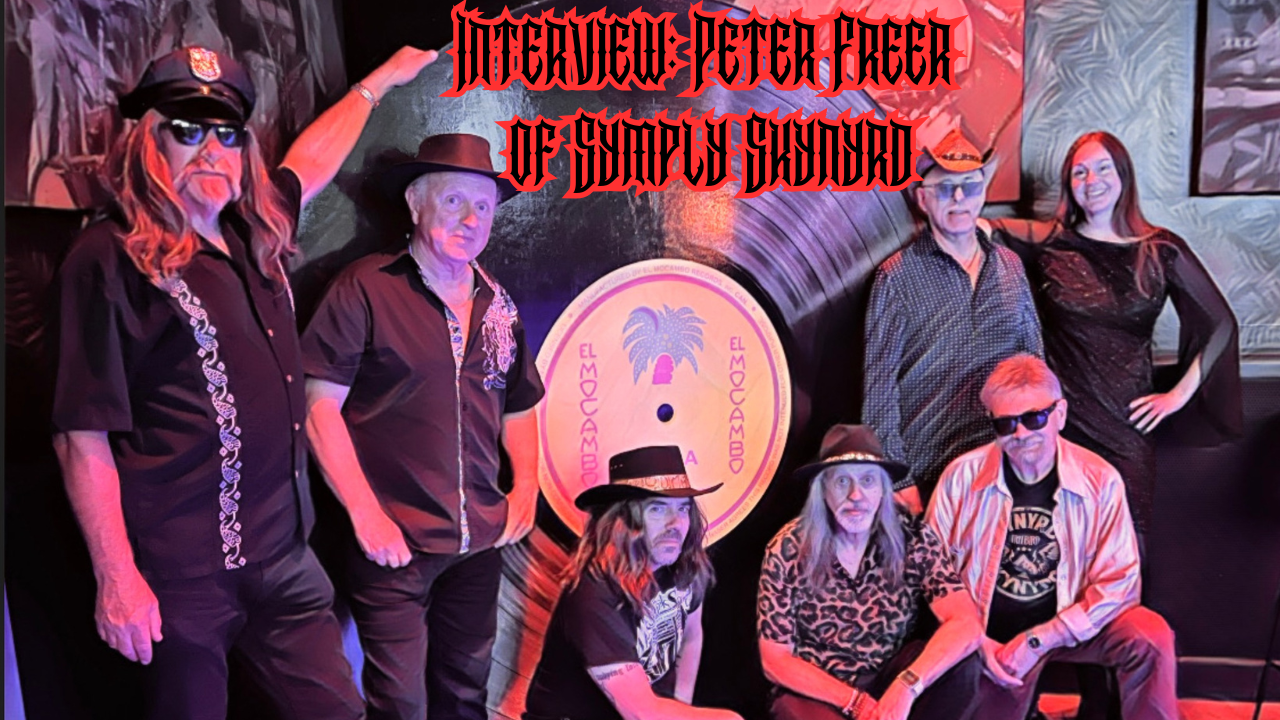
Anyway, with classic rock radio moving more into the 90s, it won’t be long until the 60s and 70s are forgotten, much like the 50s were. And that might mean a death of classic rock tribute bands because who’s going to go to a tribute show for a band that’s way before their time and one they’ve never heard of or listened to? That’s the point that Peter Freer, one of the guitarists of Canadian Lynyrd Skynyrd tribute band Symply Skynyrd made when he got in touch with the blog. He wanted to share some insights and I saw an opportunity for a conversation on this topic. Maybe you’ll see tribute bands differently when you read this interview.
Angie: How did you get started playing music?
Peter: I was inspired by new wave and punk primarily which was easily accessible from a new musician standpoint and powerful because you could emulate with a minimum of technique. I’m talking about the bands of the late 70s, such as the Sex Pistols, the Ramones and so on. So I started playing with that music. But I liked classic rock of the 60s, 70s, and 80s: Beatles, Jimi Hendrix, Led Zeppelin, Deep Purple, Free and Boston. But the electric guitar in particular was what really caught my attention and made me want to play, but I did not have the technique to play that music at that point.
Angie: How did you get into Lynyrd Skynyrd and Southern Rock in general?
Peter: Believe it or not, I was never a huge fan of the band during its heyday until the release of the Street Survivors album, which was their last album and I remember owning that album in 1977 and being completely knocked out by the level of musicianship. There were a lot of standout songs and some killer guitar playing which was my main motivator at that time musically. So, with that album and that lineup, I saw them in a different light entirely. There’s a depth of writing and a depth of musicianship. And the fact that it was a large three-piece guitar ensemble really appealed to me as a teenager.
Angie: Besides Lynyrd Skynyrd, what other classic rock bands do you like?
Peter: I think a lot of my interest in music has been guitar-focused so the three key influencers of the ‘60s and ‘70s were Jeff Beck, Eric Clapton, and Jimmy Page [Angie note: They were all in legendary 60s blues rock band The Yardbirds] – I don’t think I’m unique at all in that way. From there, I expanded my taste to include everything from pop rock to prog rock. Initially I liked classic rock like Deep Purple’s Made in Japan or Peter Frampton’s live album [Frampton Comes Alive] or even KISS – which was my first live concert ever at Varsity Stadium in Toronto in 1976. Later, I began to gravitate towards more advanced music of the era like Yes or the Dutch band Focus. I was a fan of Supertramp and Elton John as well. But again, the electric guitar was a focal point. Fortunately, there was a lot of great music to choose from.
Angie: How did Symply Skynyrd get started?
Peter: I saw an opportunity. After playing covers for many years, this tribute was a start up musical project that started in 2017 with individuals that I met online. It was similar to online dating for musicians in a way. We had a common interest which was to play live, and the idea was to focus on the best of Lynyrd Skynyrd as there weren’t as many bands doing that in the tribute segment in Canada. The other thing was it offered a technical challenge for me in that the guitar-playing was advanced and there were intricacies to the music. So I had a challenge from the standpoint of putting together a good live representation of the band, playing it correctly and delivering something that promises to be an authentic representation of the original sound with a bit of the visuals.
Angie: What makes Symply Skynyrd stand out amongst other Lynyrd Skynyrd and other southern/country rock tribute bands?
Peter: This is a good question as there are a few tribute bands that are doing this exact thing both in Canada and in the United States more so in the United States. We take the role seriously and we study the music. We study the players’ styles and we try to give a representation that will satisfy fans of every type. There are numerous guitar bands, but they are missing the essential sound which was not just electric guitar, but also keyboards and backup singers that were female.
In 2019, we added a backup singer and now the band can cost-effectively give a more fuller performance that emulates the bands original sound. What we do is we try to play it like the album, we aim to be authentic without getting into an exact visual replication. We do not jam or interpret. We do not bring our perspective. We play the music to appeal to fans and some are very picky – particularly right down to the exact guitar that was used on the original recordings. So we do our best to capture that.
Angie: What is a typical Symply Skynyrd show like?
Peter: It’s thoughtfully structured material for every show. Every show is important. We play the best of the band’s music which includes the hits that people want to hear (no B sides) and create a polished performance from start to finish. We are professional in appearance and our singer tries to represent Ronnie Van Zant. It gives us a visual hook. We cover only the music from 1970 to 1977. After trial and error of many years and many performances I have distilled it down to the best possible selection of songs which include the hits. We reference from the live album One More From the Road for arrangements and we play a couple of unique songs from that album that keeps true fans happy.
Angie: Who is the typical audience of a Symply Skynyrd or other classic rock band tribute show?
Peter: The audiences are a mix of male and female, mostly 50+ and even older. Typical boomer generation that like to hear danceable classic rock from the 70s.
Angie: What is the music scene like in the GTA [Greater Toronto Area] and southern Ontario in general?
Peter: If you’re familiar with Toronto, you know that it has been a hot music city for decades and has its own dedicated music scene. With many famous Canadian bands originating here starting out on the Queen Street West bar and surrounding circuit. Today however, many smaller venues are closing and bars that would have been part of the band gig circuit are closed down. In the 70s, 80s, 90s and early 2000s you could go out on Friday or Saturday night and walk into a bar pub and see some terrific live music both original and carvers. We still have the legendary venues: the Horseshoe Tavern, the El Mocambo and of course, Massey Hall. But Maple Leaf Gardens is now a grocery store, smaller venue like Albert’s Hall in the Brunswick House pub, where you could see Stevie Ray Vaughan is now a drugstore. The small live venue that featured classic rock is disappearing rapidly.
Angie: Do you find that most tribute band musicians stick to doing tributes and covers or do they also play original material?
Peter: From what I’ve seen tribute bands and performers tend to be primarily focused on playing live and the tribute genre gives that opportunity and provides better than average income. Tribute performers are passionate about playing, and this is the one and only opportunity to do that consistently year-round.
Angie: Do most tribute band musicians work primarily as musicians or do they typically work a day job and do this on the side?
Peter: I think it’s a bit of both, some do it full-time and are committed to it like their primary source of income. I think the majority have day jobs, careers even. It depends on their stage in life I think.
Angie: Why do you think people go to tribute shows?
Peter: Certainly it’s nostalgia. But I think it’s even more complex these days. These boomers who grew up with classic rock are now approaching 70 or are already there. By 2035, the classic rock audience (boomers) will have aged out of attending bars entirely. They are already moving away from those venues. For many fans, going to a bar just doesn’t appeal like it did. However, they still want to hear the music and so a smaller theatre or a hall is a great option. Tribute bands are a very popular alternative and many are playing soft-seater theatres. Also, concert tickets prices are high – easily $200+ per seat and far higher in a lot of cases. Also, as everyone knows most of these classic rock bands are now in their twilight years and will soon retire. A classic rock tribute is currently less than $50 for a ticket.
Angie: Why do you think classic rock is losing appeal amongst Gen Z?
Peter: I think for the subsequent generations, Gen Z etc., it’s what they’re growing up with that they are motivated to seek out. They’re growing up with a completely different style(s)of music. Bands are almost irrelevant. Music by individual performers like Billie Eilish or Taylor Swift is dominant now.
Going to a bar to see a live band is what dads or granddads did. More likely, they prefer to stay home and wait for the big show at a major venue once or twice a year.
[Angie Comment: Great point about this being a solo artist era. The only exception I can think of is in K-pop, but they’re vocal groups, but even then, members of K-pop groups are going on to have solo careers like Jennie and Rosé from Blackpink or Jungkook and Suga from BTS. I also notice that this is an era of collaboration. Collaboration existed in the classic rock era, but we see it so much more now. I also think younger people, millennials and Gen Z not going out is about us having less disposable income than previous generations.]
Angie: How do you think we can keep classic rock alive long after the classic rockers are gone?
Peter: I think the legacy will always be available in the catalogue that is available online, streaming services and on YouTube. But as far as performing it, that is the million dollar question. I think there will always be interest in the music and there’s lots of musicians upcoming that want to be classic rock players. They’re all over YouTube. But that music and style is competing with a huge stream of diversity in music.
Maybe, like vinyl, it will have a resurgence. It may be a speciality thing: with bands popping up and paying homage sort of like enthusiast bands who play gypsy swing.
Angie: What is a tribute band’s role in keeping classic rock alive?
Peter: To play live. As close to the real thing as possible. Our tribute band is for individuals who love the music of Skynyrd and want to see the band they grew up with that is no longer performing. The original Skynyrd is gone now with the passing of Gary Rossington. While a current version of the band is still touring they are in the minority. Many bands are retired permanently like Aerosmith. In other cases, bands are down to one final original member and are in their own way a tribute band.
Angie: Is there snobbery amongst singer-songwriters towards tribute and cover bands?
Peter: I think there certainly was and probably still is. I think the original concept of a tribute band had a bit of a bad rep. You know; the cheesy image, the wigs, the costumes, the bad band names – a poor knock-off. I think that the current crop of nostalgia based tributes (which seems to be growing rapidly here) are more professional these days and incorporate quality performance and in some cases that includes multimedia. So in that way, they’re bringing the big stage performance of the original band in their heyday. Which I think is a little bit more dignified than some of the current classic rock bands that are actually touring their original material with 80 years old members trying to sing like they did when they were 25.
Angie: What is your proudest accomplishment as a tribute band?
Peter: Firstly I am proud to have the opportunity to play with a great band. Every time we play and we see people enjoying themselves- really revelling in the moment – it makes all the hard work worthwhile. Any musician: tribute, original artist, whatever, will tell you it is hard work. It takes real willpower to make a show happen. You have to want to do it. You have to be passionate about it because there are more obstacles than opportunities. So, when we do have a great audience that appreciates the music it’s like validation: “Yes! Job done.”
You can follow Symply Skynyrd on their website, Facebook, and YouTube.
Liked this blog post and want to support my work and see more? Donate to The Diversity of Classic Rock on Patreon or Paypal or follow me on Facebook, Bluesky or Instagram, buy my book Crime of the Century, click the follow button on my website, leave a nice comment, send your music or classic rock related books for review, or donate your art and writing talents to the blog. Thank you for your support! If you donate any amount of money to my Patreon or PayPal, you’ll get a Crime of the Century ebook, so it’s basically pay what you can! The best deal you’ll get on the book and you won’t find this deal anywhere else! I just want to give back to my readers and say thank you for your support.
 The Diversity of Classic Rock