
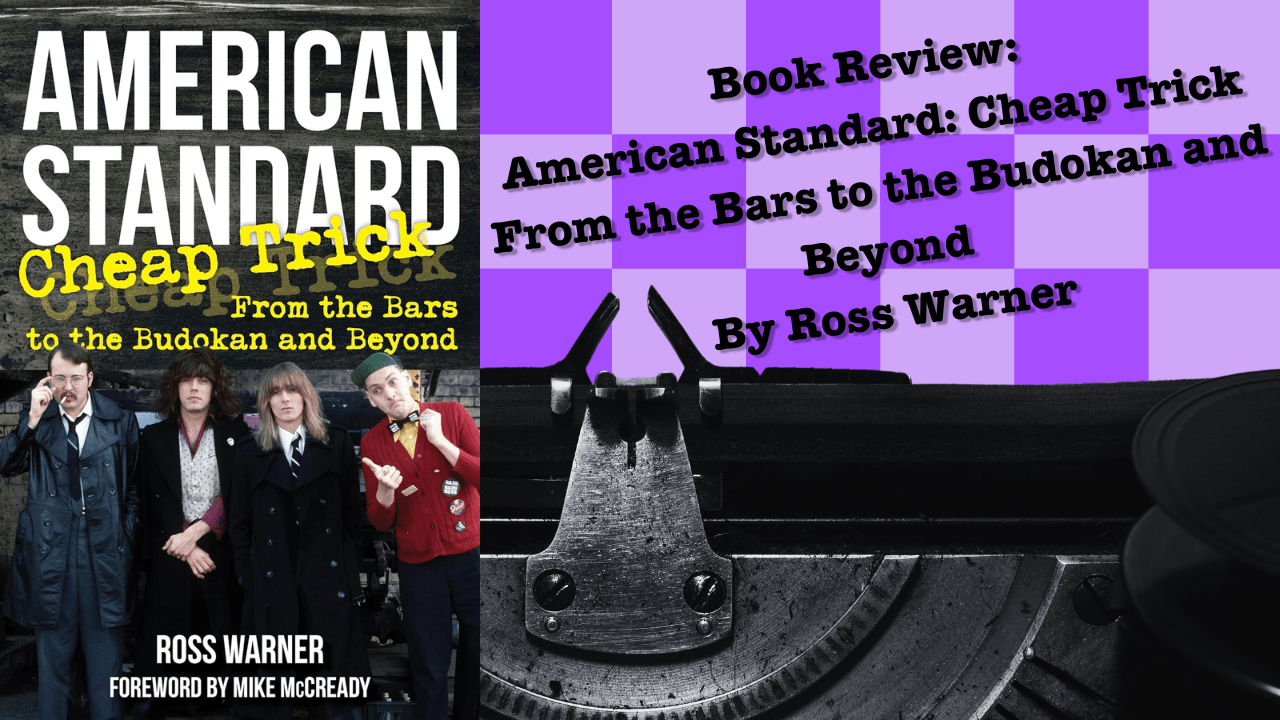

Disclosure: I received a review copy from the author in exchange for my honest opinion.
There are quite a few bands that could be compared to The Beatles, and originally I was sceptical of it, but as I read and researched over the years, I think there’s merit to some of these comparisons. One of the bands most frequently compared to The Beatles are Cheap Trick, who are best known for their live album At Budokan, recorded at an indoor arena built for the Tokyo Olympics in 1964. The Beatles were the first rock band to play there back in 1966 and 12 years later Bob Dylan and Cheap Trick performed there, making history. Originally, this live album was supposed to be a Japan-only release, but after a promo record sent to radio stations called From Tokyo To You got airplay, there was demand for the album so months later it got officially released in the US. It was a very commercially successful live album with it selling over 3 million copies and it’s one of those albums where the live versions are better than the studio versions. Just like the Frampton Comes Alive version of “Do You Feel Like We Do” is superior to the studio version that no one plays by the way, I prefer the At Budokan versions of “Surrender” and “I Want You To Want Me” to their studio versions. In general, this is a great live album and I’d highly recommend it even if you’re not really keen on live albums, it’s one of my favourites. This live album was the culmination of years of paying their dues, with the cover of Fats Domino’s “Ain’t That A Shame” (based on John Lennon’s version from Rock ’N’ Roll) being a live staple at their early shows.
Cheap Trick are one of the best known bands from my home state of Illinois (and the biggest thing to come out of Rockford tbh) and even though I haven’t been back to my home state since I left almost a decade ago, it’s still a place that is very near and dear to my heart and I have a lot of pride in it even if I complained a lot while living in Chicago. Sure, the cold sucks, but I had my favourite shops and restaurants and every time I watch a John Hughes movie or Mean Girls I get nostalgic. So when the author Ross Warner sent an email asking me to review the book, I jumped on it because I love Cheap Trick’s At Budokan album, they’re from my state, and as someone from Illinois who has a love of British rock and roll, they are so relatable. Their sound has been compared to not only The Beatles, but also The Who and The Kinks, and The Rolling Stones are a big influence on them too, and those were my favourite bands to listen to as a teenager and as a college kid.
The book is a biography about this hardworking band from the Midwest, and I’m not sure if hardworking is enough because they really did work hard. Since they formed 52 years ago, they have played 5,000 live shows, so on average about 100 shows a year. They would play clubs all over Chicagoland and Wisconsin, honing their craft until they got a record deal.
This book debunks many of the myths in the band’s lore. Much like their idols The Who, there’s a lot of myth making and it’s understandable because that’s all part of marketing. They were introduced to the world on their self-titled debut as a band with “no past”, and well that’s just not true since everyone has a past. One of the funniest lies in the highly fictionalised bio is Bun E. Carlos being Venezuelan with his last name being Bunezuela, as someone who is actually of Venezuelan descent I laughed – the reality is his name is the more ordinary sounding Brad Carlson. One of the first myths debunked in the book is the story about their name being inspired by Wolverhampton glam rockers Slade and how they would break out every “cheap trick” in the book. No, it was from Rick Nielsen calling a guitar riff a cheap trick. As a rock band you’re not just selling music, you’re selling a fantasy and you’re selling an experience, especially if you’re playing gigs. The money really is in live shows and merch because record labels take and take so you want to create a show that is memorable and one that people would regret skipping.
One of the common myths is that hard rock music producer Jack Douglas (who had worked with Aerosmith, John Lennon, and The Who) randomly discovered them at a venue in Wisconsin, which sounds like a Disneyfied Hollywood biopic story (like Bohemian Rhapsody), but the truth is Cheap Trick sent him a recording of their set opening for Lou Reed, contacted him, and paid for him to travel to see them. Right before Cheap Trick got a record deal with Epic Records, Bun E. Carlos had broken his arm, so they had to have a substitute drummer, Hank Ransome, for a gig in Madison that A&R people attended. They were so impressed with how the crowd got into it and the visuals that they signed them on the spot. Rick Nielsen and Tom Petersson wanted to have two drummers in the band, but Bun E. Carlos vetoed the idea.
Before the record deal and fame, Cheap Trick had crossed paths with their idols. Drummer and band archivist Bun E. Carlos acted like he belonged by pretending to be a journalist to meet Jeff Beck backstage at a concert in 1965, interviewed Pete Townshend in 1968, and taped concerts of Jimi Hendrix, Cream, and The Rolling Stones. He was listening to The Move and The Small Faces, when pretty much no one else in America had heard of them (for Americans not in the know, The Move members Jeff Lynne and Bev Bevan went on to be in ELO and Roy Wood was briefly in ELO before leaving them to form Wizzard). He was listening to David Bowie before he got popular in America. Rick Nielsen would pay a pretty penny to import rock music magazines directly from England and in the late 60s he and Tom Petersson travelled to England to follow in the footsteps of their idols.
Visuals-wise, Cheap Trick had their repeated typewriter-style logo since their show opening for Lou Reed in Madison, Wisconsin in 1975, made by early fan Christopher Crowe. Early on, they were profiled in the Chicago Sun-Times with journalist Cynthia Dagnal calling them “Beatles with balls.” Rick Nielsen found his signature chequerboard and baseball hat clad style while gigging and that distinguished them from other hard rockers. He also is well known for these crazy 4 and 5 neck guitars that made him stand out.
They quickly rose in prominence by 1977, playing hundreds of shows, opening for Queen, REO Speedwagon, The Kinks, Rush, Santana, Kansas, The Runaways, and Boston. These were big opportunities and word of mouth spread, and a year later the band would be going overseas. The opportunity opening for Queen in Milwaukee and Madison came thanks to an accident Thin Lizzy guitarist Brian Robertson cut his hand in a fight so they couldn’t open for Queen. Sadly, the 35 minute opening set went poorly because of sound issues – it’s a big jump going from playing in bars to playing in stadiums and theatres. Even with these hiccups, they still caught the eye of the Japanese music press, who were really into Queen and with Cheap Trick being the opening act, they got exposed to them and the band were interviewed about opening for Queen. Queen of course were an incredible live act with the band members being masters of their craft and Freddie Mercury being the frontman with the best stage presence and a powerful voice. They had cool stage costumes and Japanese fans loved the photos in Music Life magazine. The article either appeared in Music Life or Ongaku Senka and all of a sudden they were getting fan mail from Japanese fans. “Clock Strikes Ten” became a big hit in Japan, but it wasn’t a hit in America. Being on the same bill as The Runaways, another group big in Japan, created some iconic photographs promoting Cheap Trick with Joan Jett, Sandy West, and Lita Ford being photographed in Cheap Trick band shirts. Opening for KISS was a huge opportunity for them and they got their confidence and won some new fans playing for such a theatric rock band with a dedicated fanbase, The KISS Army. This epic year of opening for so many greats led to them being dubbed “America’s hottest opening band”.
In 1977, not only did Cheap Trick tour a lot and release their debut album, they released a second album, In Color, with a more commercial sound. Cheap Trick were so busy that they literally would just step out of the studio after playing the last notes to go on tour and they didn’t hear any of the mixes and what touches the producer put on the album. Their goal was to sound like The Who, but they felt that they sounded more like The Guess Who and there was a discrepancy between studio and live Cheap Trick, which you can easily see on the song ‘I Want You To Want Me”, which is more rocking and energetic live. To compare them to The Who, the difference between the studio and live versions of that song remind me of the poppy 1969 version of “I’m Free” versus the harder rocking version from the film adaptation of Tommy. They felt that producer Tom Werman watered down their sound and so decades later they tried to re-record it, but sadly the re-recordings were never finished.
1978 was a big year for the band with them making their live debuts in the UK and Japan, playing at bigger venues, and the release of their third album Heaven Tonight – the first album they felt satisfied with. Now here’s the myth with that album, it was once said that the album was originally going to be called American Standard, like the toilet, but that was never a real possibility according to former CBS Records product manager Jim Charne. It was a return to the rawer sound, but with a step up. On this album they recorded an excellent cover of The Move’s Little Richard inspired “California Man”, in fact this was the last single they recorded before becoming ELO. Other highlights of Heaven Tonight include “Surrender”, “On Top of the World”, and “Auf Wiedersehen”. One fun fact: originally Cheap Trick name-checked Queen in “Surrender”, but they changed it to KISS in “got my KISS Records out”. Funnily enough, as Cheap Trick were on the rise, KISS were in a lull and they had to beg Cheap Trick to be on the same bill as them to sell more tickets. At some shows at this time, Cheap Trick would perform “Surrender” in concert, they would throw out a copy of KISS’s latest album Dynasty, which had the disco-influenced single “I Was Made For Loving You”. This was all going on right around the same time as the Disco Demolition in Chicago.
By the time Cheap Trick arrived in Japan in April 1978, they had a couple of big hit singles with “Clock Strikes Ten” and “I Want You To Want Me”. When they arrived, they were greeted much like The Beatles were, with gifts and lots of screaming young fans excited to catch a glimpse of their idols. When they got to their hotel, they had a lot of security and they were told that they couldn’t open the curtains and look out the window to protect the safety of the fans, who would run out into traffic to get a closer look. Stepping out of the hotel wouldn’t be possible without being mobbed by fans, so they had to travel to the Budokan in a truck covered by blankets, but fans were wise and knew they were in the truck. If you’re ready for another myth, here we go: “I Want You To Want Me” was not added to the setlist last minute to lengthen it, but rather because it was a big hit in Japan. They had stopped playing that song at their American shows because it was not a hit and it was a “poppy” song, but Japanese crowds loved it and through that, American audiences loved the Budokan version and so as Rick Nielsen put it “We had to go to Japan to be known in Chicago.” I’d honestly say “Surrender” is a great example of classic rock’s greatest flops.
Coming back to the States after being seen as the biggest band at the moment must be quite an adjustment. A few months after their Budokan shows, their album was released in Japan and sold as an import in other markets like the US, Canada, and UK. In the UK, it was pressed on yellow vinyl. People would drive long distances to get the coveted live album At Budokan. And from there, there were knock on effects with their back catalogue selling well too. It was a thoughtfully packaged album with a booklet, poster, and cool gatefold art, so it’s no surprise that people were keen to buy it. As beloved as the live album was, the band were accused of augmenting the sound in the studio and their management and bad did not take kindly to these claims that could hurt their reputation and they invited a journalist who criticised them to one of their shows to show that’s really what they sound like. Another hurtful criticism they received was being accused of ripping off their favourite bands and plenty of other acts referenced their influences, but because of their tongue in cheek persona, they got called rip-offs.
Off the back of Budokan, they were on the cover of Rolling Stone and had features written about them. They were even considered for the movie Rock ’n’ Roll High School, but they turned it down because the pay wasn’t enough. But they did get another opportunity in film, by making the soundtrack to the coming-of-age film Over the Edge. Their follow up album Dream Police was delayed and the band were really upset with this. Sadly, the long wait came with mixed reviews with some harsh criticisms of the band losing their way. Personnel wise there were changes with Tom Petersson falling in love with a German model and left the band in August 1980, right before the release of the album All Shook Up, produced by Beatles producer George Martin, another dream come true for the band. For a while there Tom Petersson basically was checking out of the band and wanted more input and so he released a solo album. Bun E. Carlos and Rick Nielsen were invited to play on John Lennon’s last album Double Fantasy, recording the songs “I’m Losing You” and “I’m Moving On”, but ultimately these takes weren’t used on the album, but you can hear them on The John Lennon Anthology. They did get to see John Lennon’s “Day Tripper” guitar and tell him about their cover doing well in Phoenix though! Rick Nielsen got his wife’s blessing to miss the birth of his son Daxx (who now plays drums for Cheap Trick after Bun E. Carlos’s departure) just because it’s his biggest idol.
Much like their idols, they had issues behind the scenes with their record company, a typical thing that rock bands went through in the classic rock era., and they sued their record label and producer for breach of contract, interference with prospective business associates, improper accounting, and inducement to breach in their complaint. Basically, they were not getting the money that they had earned and they were not being marketed properly. They were also prevented from playing songs from Dream Police because they needed to promote At Budokan and this left them feeling like they were in a rut. As good as the songs are, you get sick of playing the same setlist month after month. By this point they were headlining at venues where they had previously opened for other bands. One of their dreams came true, opening for The Who at the Open Air Festival in Germany.
In the 80s they struggled to come back, but they finally got their first and only #1 with “The Flame”. Tom Petersson returned to the band in 1987. In the 90s, they started to get recognition and grunge bands like Nirvana, Smashing Pumpkins, and Pearl Jam cited them as an influence. The foreword of this book was written by Mike McCready of Pearl Jam. Cheap Trick continued to cash in on Budokan with the release of Budokan II, which started the track listing at 11 instead of 1 to symbolise it being a continuation, not a sequel. In 1995 they held a fan convention called Trickfest in Chicago. Their song “Dream Police” was featured in an episode of popular cartoon The Simpsons. If you’ve made it into The Simpsons, it’s fair to say you’re a legend. Fellow millennials will remember Cheap Trick’s cover of Big Star’s “In The Street” being the theme song of That 70s Show – I know this was my first exposure to Cheap Trick. That show is like the personification of their signature song “Surrender”. This appreciation from a new generation of fans is re-energising and it’s a nice reward for decades of hard work and a testament to how memorable your work is.
Sadly, there was intra-band drama in 2010 when details of the beef between Bun E. and the rest of the band went public and he was let go. He had a 25% share in the band, but in 2012 he stopped getting cheques and he sued his bandmates and they countersued. In 2015, they settled just in time for their Rock and Roll Hall of Fame induction ceremony, which was long-awaited. They didn’t get in until their 13th year of eligibility and fans were understandably annoyed with them getting passed over year after year. As you can expect, there was a lot of tension on stage. That’s the last time Bun E. Carlos played with Cheap Trick.
To sum it up, the book is a great look at the peak years of Cheap Trick, their rise to fame, and seeing their dreams coming true thanks to their hard work. It’s very well researched as you’ll be able to see in the notes section with many articles, both vintage and new, cited. As you can expect, most of the book is focused on the rise to fame, Budokan, and the period of success that had come as a result of that, and I like that because obviously the most interesting things and the meat of the book should be the band’s prime. The last chapter of the book sums up the 80s and onwards, with Cheap Trick being said to have spent more time trying to make a comeback than actually being on top, but they are a band that have persevered throughout the years and have a loyal fanbase. I find the last chapter to be quite relatable with a message about adulting, do we really know what we’re doing? Not really, adulting is really just pretending you know what you’re doing. A lot of fake it ’til you make it! You get a real feel for their work ethic and there are so many fascinating quotes and information about how great their live shows are. The stories in this book are entertaining to read. It definitely gives you a new appreciation of the band. As someone from the Chicago area, I get a kick out of all the familiar place names and as someone who loves British rock and roll, I loved seeing my favourites being mentioned. Definitely a great read for a Cheap Trick fan! As a big Beatles fan, I loved the Beatles-related stories and I think it’s got some interesting facts for the Beatles fans. Even if you’re not a Cheap Trick fan, you might be converted into one by the end of the book!
Bonus video for the Beatles fans, Cheap Trick covering songs from Sgt Pepper. Easily one of the best Beatles tributes I’ve ever heard!
Liked this blog post and want to support my work and see more? Donate to The Diversity of Classic Rock on Patreon or Paypal or follow me on Facebook, Bluesky or Instagram, buy my book Crime of the Century, click the follow button on my website, leave a nice comment, send your music or classic rock related books for review, or donate your art and writing talents to the blog. Thank you for your support! If you donate any amount of money to my Patreon or PayPal, you’ll get a Crime of the Century ebook, so it’s basically pay what you can! The best deal you’ll get on the book and you won’t find this deal anywhere else! I just want to give back to my readers and say thank you for your support.
 The Diversity of Classic Rock
Before Cheap Trick came the Grim Reapers with Rick Nielsen and Tom Petersson. They were scheduled to open for Otis Redding at The Factory in Madison WI on December 10, 1967 – the day Otis died. (Tickets were $3 in advance, $3.50 at the door.)
LikeLiked by 1 person
Yes. That was mentioned in the book. Incredibly sad! 🙁
LikeLiked by 1 person
Wow, some of those Cheap Trick myths are wild! Also, that story of them getting the opening band slot for Queen was interesting. Sad for Brian Robertson, but everything happens for a reason!
LikeLiked by 1 person
The publisher is allowing folks to order straight from them at 30 percent off. The shipping is quite reasonable and it even went out during Canadian post strike. I am glad people enjoy the book and hope do to do a part 2
https://rowman.com/ISBN/9781493078066/American-Standard-Cheap-Trick-from-the-Bars-to-the-Budokan-and-Beyond
Use code RLFANDF30
LikeLiked by 1 person
I’d love to read part two! 😃
LikeLike