


Intro/Why am I writing this?
In 2023 there was a new Beatles song, “Now And Then” and a new Rolling Stones album, Hackney Diamonds. Never thought I’d say as a millennial that I’d hear a new Beatles song, that’s wild! I’ve listened to the new Beatles song and quite liked it, it’s very beautiful and the way they finished it and mastered it with new technology was so cool and something John Lennon would have loved, no doubt. It’s yet another example of why The Beatles are the GOAT. Didn’t listen to the new Rolling Stones album, sorry.
The Beatles have set a new record with “Now And Then” with it topping the British charts and making them the band with the longest gap between chart toppers, 54 years!
With The Beatles being all over the media, there’s bound to be new fans, especially from the younger generations. It makes me sad to see old classic rock fans and even some classic rock fans around my age acting like gatekeepers. Who died and made you the bouncer of the Beatles fandom? You are not better than anyone else because you’ve been a fan longer, know all their songs by heart and can recite them from rote memorisation, have seen them in concert, have met them, have their autographs, have the biggest or the most complete collection, have some rare coveted piece of merch or vinyl pressing, or have all the first pressings. As if The Beatles are top secret and underground? They were only the biggest rock band in the world and one of the bands that changed rock and roll the most. Isn’t it a good thing that we have more fans, which means more people to talk to about the music we love? The bands themselves don’t care. Heck, if anything they’re happy to see their music continue to be loved decades later. There’s a first time for everything and who cares how you got into The Beatles whether it was your parents, your friends, browsing a record store, the internet, a movie, a TV show, a video game? You’re here. You’re a fan. Welcome to the fan community. If you like The Beatles’ music, you’re a fan and that’s enough. You don’t need to prove anything to anyone. Anyway that’s enough of ranting about fandom gatekeeping.
Here’s my little Now & Then collage of me as a Beatles fan over the years and in various locations:

I got into The Beatles when I was 14 and fell in love with the 60s because of Austin Powers and its cool 90s does 60s aesthetic. That movie made me want to live in the 60s. While it wasn’t possible to live in the 60s, I could bring the 60s into my life by listening to the music and wearing the fashions of the time period and so that’s what I did slowly but surely. Like a lot of classic rock fans, my “gateway” band were The Beatles. I was obsessed with The Beatles. All I thought about were The Beatles. I tried to make all my school projects about The Beatles. But I knew there was more to classic rock than The Beatles and I wanted to listen to it all. As Queen once sang: “I want it all and I want it now!” I didn’t have a guide to classic rock. All I had was Wikipedia and classic rock stations to guide me through the ocean that was classic rock. While my parents are boomers, they weren’t obsessed with classic rock like I was.
When I started this blog in 2015, I wanted to make it the guide to classic rock that I wish I had when I was a teenager. A couple years ago I started a series of blog posts called Listen to This, Not That. I stopped writing that series because I got distracted by other quests: writing projects for the blog and my upcoming book, Crime of the Century. I know my opinions on classic rock are ever-evolving so I’d love to revisit that series one day, maybe as a book, depending on how well Crime of the Century does. So this is a mini-revisiting of the Listen To This, Not That idea, but not quite that title literally. I love The Beatles and I’ll never forget how without them, I wouldn’t be crazy on classic rock.
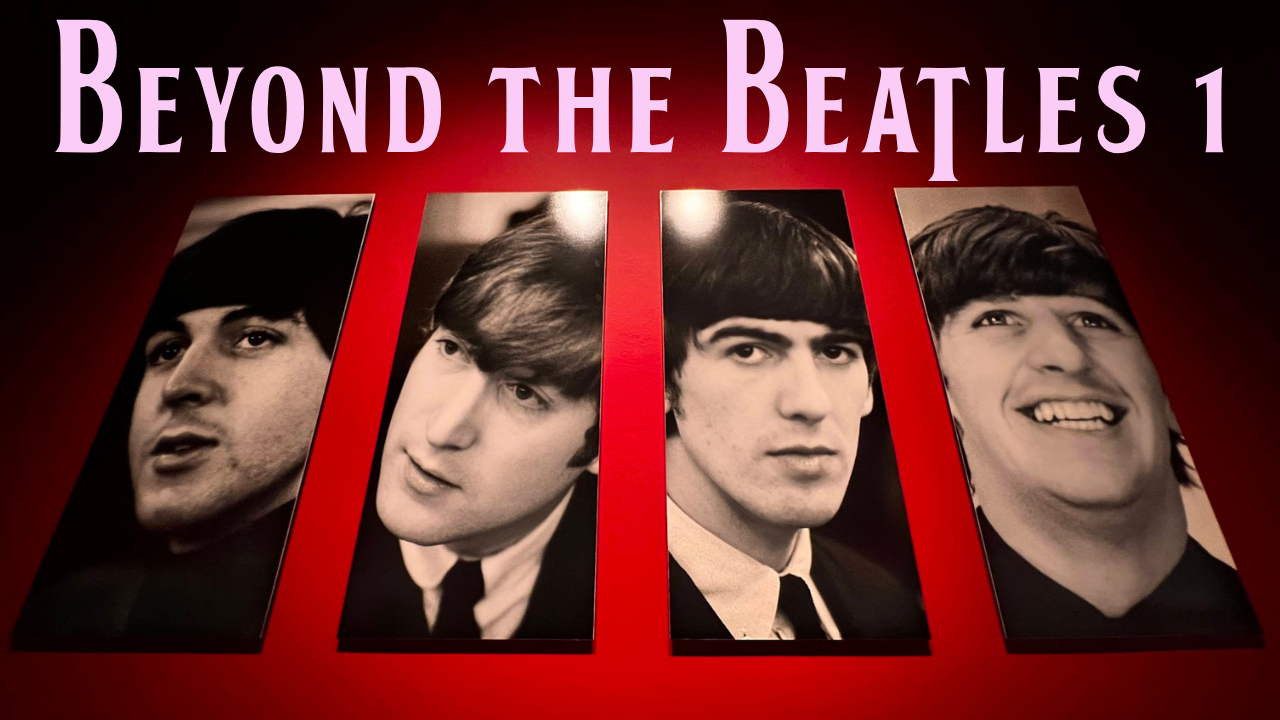
In Beyond The Beatles we’re going to be exploring three different paths you can take to get into classic rock. I know how magical The Beatles are and I think you can find a lot of other great stuff in other bands, just keep an open mind. I carefully selected and curated these three paths that you can take: classic rock that you might love if you love The Beatles, no AI, no algorithms, just me and my knowledge of classic rock. Good old rule of three, simple as. I will limit each path to 15 bands so you’re not too overwhelmed because I know that one of the reasons I may not get into something is I’m overwhelmed by how much there is and I want to keep it simple. This isn’t an exhaustive list and I know it won’t please everyone because someone will inevitably say “you forgot my favourite!”, but the whole point is for this series is to be a starter and a springboard to get into more classic rock bands and artists.
The first path, which I’ll be discussing in this post is called Contemporaries – these are the bands that came out at the same time and were vying for the top spots in the charts alongside The Beatles. This is going to be the easiest path to go down since it’s going to be stuff from the same era: the 60s and a lot of it will have a similar sound, but there will be some unique things about each band.
The second path, which will be the next blog post is called The Next Beatles/Beatlesque, so artists that were either considered to be the Next Beatles or sound a lot like The Beatles. Most of these will be from after The Beatles’ time, but some are from the same era.
Finally, our third path is called Influences, musicians who influenced The Beatles (and the 60s generation as a whole) – without these artists, there would be no Beatles and no classic rock. I think this one’s especially important because we need to acknowledge what came before the 60s and where rock and roll came from. Even if the 50s is too old school for you, it’s good to have an appreciation for it and see how it was a building block for the 60s and beyond.
I chose these three paths because I think these are the easiest musicians for a Beatles fanatic to get into and it’s a great way to introduce Beatles fans to classic rock history, gain an appreciation for classic rock as a whole, and broaden their horizons.
As I post the other parts of the series, they will be linked above for easy reference.
Beyond The Beatles: Their 1960s Contemporaries
I know from experience, the first bands that I got myself into after The Beatles were their 1960s contemporaries. I was already fascinated by the 60s and I wanted to listen to everything from that decade. So it was a no-brainer, listen to the other British Invasion groups! As an American, I was fascinated by all things British because it seemed like a whole different world and so cool to me. Fast forward and I’m now living in England writing this blog post, a dream come true! I was so hyperfixated on anything British and 60s when I was young that I neglected the American side of things and I think that was a mistake. There’s a lot of great American music from the 60s and I’m including a few American acts that I think are important and great contemporaries. Some of them influenced The Beatles, shared bills with The Beatles, or were friends with The Beatles.
In this path, there are three different mini-paths: one being Merseybeat, the other British Invasion, and of course the American side of things. The first two have a lot of overlap, but hey the rule of three works!
How this is going to work is we’re going to have a section on each band and a selection of songs that I think Beatles fans would enjoy. I’ll only be focusing on each band’s 60s discography because The Beatles broke up by the end of the decade. Now unlike my Listen to This, Not That series, I will not limit this to deeper cuts. I’m writing this blog post for newbie classic rock fans, but also it can be a great playlist for longtime fans. There’s something for everyone! I’ve made a playlist for your convenience and enjoyment and you can listen to it here and if you have Spotify, you can bookmark it and play it whenever you like!
Merseybeat
The Beatles are from Liverpool, but they’re not the only band to ever come out of Liverpool even if they’re the most famous export. The Beatles were just one of many beat groups and Liverpool had quite a few other beat acts like Gerry and the Pacemakers, The Searchers, The Merseybeats, The Swinging Blue Jeans, The Fourmost, Billy J. Kramer (The Dakotas themselves were from Manchester though), Rory Storm & The Hurricanes, The Liverbirds, among others. Billy Fury and Cilla Black were also from Liverpool and there are statues honouring them in Liverpool. Freddie and the Dreamers, Wayne Fontana & The Mindbenders, and Herman’s Hermits had a similar sound, but they’re from Manchester. In Liverpool there’s a Wall of Fame of chart toppers by acts from Liverpool – shows that women were in pop & rock music history from the start! And not only that, Lita Roza was of Filipina descent! Asians were part of British pop music history from the start!:

Now that’s a pretty long list and can be intimidating to get through, so we’ll put our main focus on two groups: Gerry and the Pacemakers and The Searchers since they both had quite a few hits.
Gerry and the Pacemakers: This group were formed in 1956 by brothers Gerry and Freddie Marsden, Les Chadwick, and Arthur McMahon. Later, Arthur McMahon was replaced by Les Maguire. So there were two brothers and two guys named Les in the band. Like a lot of bands, they went through a name change from Gerry Marsden and the Mars Bars to Gerry and the Pacemakers. You can probably guess why they changed their name, Mars weren’t happy with their trademark being infringed on. Like The Beatles, Gerry and the Pacemakers had Brian Epstein as their manager and George Martin produced their hits. They also followed The Beatles to Hamburg. Americans may see them as a one hit wonder, but they really were more than that.
Why Beatles fans might love them: Similar sound, also part of that Merseybeat scene. They also had success early on in their career, with their first three singles: “How Do You Do It?”, “I Like It”, and “You’ll Never Walk Alone” topping the charts. Similar influences. They also covered songs by Chuck Berry (“Maybellene”) and Larry Williams (“Slow Down”).
The Searchers: Another big group from Liverpool, like The Beatles, they started off playing skiffle. Their name came from the 1956 John Ford western film of the same name. Like The Beatles and Gerry and the Pacemakers, they went to Hamburg to play in clubs there in the early 60s. The band was formed by John McNally and it had a changing lineup, but some of the most famous members are Mike Pender, Tony Jackson, and Chris Curtis. The Searchers kept changing their lineup and recording new music even in the 70s and beyond, but didn’t have the same level of success as before. The 60s was an ever-changing decade and that meant if you didn’t keep up with the changing trends, you were left behind.
Why Beatles fans might love them: See what I said above about Gerry and the Pacemakers. A lot of the same things apply to The Searchers. Like The Beatles, they covered the Richie Barrett song “Some Other Guy”. Beatles fans would also love “Sugar and Spice”, “One of These Days”, “Listen To Me” (Buddy Holly cover), “Sweets For My Sweet” (Drifters cover), “Love Potion No. 9” (Clovers cover), and “Needles and Pins” (Jackie DeShannon cover).
British Invasion
There were a lot of great rock bands making names for themselves in Britain in the 60s and I think the cool thing about a lot of these bands is that they changed with the times and remained relevant way past the beat music era of 1963-1965. I can say that a lot of these groups had various eras and had similar influences so if you’re more into the later Beatles material, you’d also like them. That’s one of my favourite things about The Beatles, they were doing the “in my X era” thing long before Taylor Swift and Gen Z. Also, don’t limit yourself, it isn’t The Beatles or (insert 60s band here), it’s The Beatles *and* (insert 60s band here). You can like more than one thing! Heck, you can like classic rock and the top 40 chart music of today. There’s no rules for enjoying music. Listen to what you like.
The Rolling Stones: Rivals? That was more of a press thing. The media loves to stir the pot. They were actually quite friendly with each other and saw each other as friends and respected each other. The rivalry was more in a friendly, competitive way, with a little banter as a treat. In reality you don’t have to pick between Beatles or Stones, you can say, “Both. Both is good” as they said in The Road to El Dorado. In fact, The Rolling Stones covered a Beatles song, “I Wanna Be Your Man” early in their career – original plan was to cover “You’ll Never Walk Alone”, but they decided to cover the Fab Four, good choice, I think “I Wanna Be Your Man” suits them better. Paul McCartney and John Lennon contributed backing vocals on “We Love You”. On their latest album Hackney Diamonds, Paul McCartney guests on their song “Bite My Head Off”. The Rolling Stones started off as an R&B group but came into their own as the 60s went on. They have a lot of the same influences and I like how The Rolling Stones evolved and came into their own by the mid-late 60s, writing great 60s anthems. They even had their own Sgt Pepper moment of sorts with Their Satanic Majesties’ Request. There’s some more gritty songs and some LGBT themed ones too. There’s a good diversity in their discography and I love how they had their own raga rock moment with “Paint It Black”.
The Dave Clark Five: Another rival rock band from London who were an early British Invasion success – they were huge from 1964-1966. They’re a textbook example of the 60s Tottenham sound, which has a lot of similarities to Merseybeat. There’s no doubt you’ll love their songs if you like The Beatles and just like The Beatles and Gerry and the Pacemakers, they starred in a feature film of their own, Catch Us If You Can. Unfortunately, Dave Clark treated his bandmates poorly and took all the money for himself and even didn’t give credit to songwriters.
The Animals: These guys were from Newcastle, so quite far away from London. Eric Burdon joined Alan Price’s Rhythm and Blues Combo and they changed their name to The Animals, a name given to them by British R&B founding father Graham Bond. If you like more R&B based rock and roll like early Rolling Stones and Yardbirds, then The Animals are another great band to listen to. More than likely you already know “The House of the Rising Sun”, so they’re not hard to get into. I find that listening to R&B inspired rock bands are a great gateway for getting into the real R&B from the 50s and early 60s and I think that was definitely the case for American rock and roll audiences, as British rock and roll is more R&B influenced than pre-British Invasion American rock and roll. Later they did some more psychedelic and garage rock sounding songs, one of my favourite ones of theirs is “Inside Looking Out”, which Grand Funk Railroad did an amazing cover of (with a bit of a stoner twist in the lyrics). If you want something more psychedelic, “San Franciscan Nights” is a good song. After The Animals, Eric Burdon went in a completely different direction, joining funk/Latin rock band War, singing lead vocals on their hit single “Spill The Wine”.
The Kinks: You want something more political (leftists and socialists will love them!) and distinctly British? Then The Kinks are the band for you. Like a lot of bands of their time, they tried their hand at sounding like The Beatles with songs like “I Believed You” and “You Still Want Me”. I also think “Party Line” is a rather Beatlesque song. And John Lennon loved their song “Wonderboy”. The Kinks also had a couple raga rock songs: “See My Friends” (apparently Paul McCartney said he wished he wrote that song) and “Fancy”. After a few false starts, they found success with their “power chords” era with songs like “You Really Got Me” and “All Day and All of the Night”. Creatively, they were at their peak from 1966-1969. Sadly, a touring ban in America hindered their success, but these songs did well in their native UK and in Europe. Their early songs were simple and brilliant, but their later songs are where they really shine with Ray Davies’ wit and storytelling abilities. Like The Rolling Stones, they have quite a few LGBT themed songs. Sadly though The Kinks don’t think as highly of The Beatles, although Pete Quaife really loved them. Don’t let their opinions stop you from liking their music though.
The Who: Another great band with top tier songwriting. Gotta love Pete Townshend. If you’re more into hard rock, you’ll love The Who since they were a big influence on a lot of those 70s hard rock bands. Interestingly enough, The Beatles weren’t Pete’s blueprint, but rather The Kinks, so if you like The Kinks, you’ll like The Who, especially their songs like “I Can’t Explain” and “The Good’s Gone”. If you like R&B, then you’ll like The Who’s early material – Maximum R&B is a very fitting term for them. Like the Stones and the Kinks, they found their own unique sound over time with Pete Townshend writing rock operas starting with the rock opera in a song “A Quick One While He Was Away” – when they performed this live on The Rolling Stones Rock & Roll Circus, they blew The Stones out of the water and they refused to release the concert film for decades. You could say they were a three ring circus: Roger Daltrey twirling his microphone, Pete Townshend with the windmill, Keith Moon with his antics on drums, and then there’s John standing there with the bass and making one facial expression. You like the concept of Sgt Pepper? You might like The Who Sell Out, where The Who intersperse mock pirate radio jingles and adverts. If you liked Sell Out, then you’ll love Tommy. While it isn’t the first rock opera or concept album, it’s still a masterpiece and easily one of the best albums of the 60s.
The Zombies: While they didn’t have the most prolific output of the bands listed here, the albums that they did release were amazing. Odessey and Oracle is a real masterpiece and it always shocks me that it was a flop at first. When I was getting into 60s music as a teenager, their songs “She’s Not There” and “Time of the Season” were love at first listen. Keyboard player Rod Argent said in a Rolling Stone article that one of the songs that had the biggest impact on him was The Beatles’ “Please Please Me”. It was a song that blew him away when he first heard it faintly on Radio Luxembourg. He praised The Beatles for being inventive and always singing from the heart. No doubt did Sgt Pepper have an influence on Odessey and Oracle. Interestingly enough, The Zombies weren’t really into drugs like The Beatles were. LSD? No thanks, they’d prefer pints. Two of their non-album songs I like are “She Does Everything For Me” and “Is This The Dream?”.
The Yardbirds: Like The Animals and The Rolling Stones, their style of rock and roll is heavily R&B based. This was the band that launched a lot of rock guitarist careers with three classic rock guitar giants as Yardbirds alumni: Eric Clapton, Jeff Beck, and Jimmy Page. They started off playing R&B covers before finding success with the poppy Graham Gouldman-penned “For Your Love”. If you love fuzzy Beatles guitar songs like “Think For Yourself”, “Day Tripper”, and “Taxman”, you might like “Shapes of Things”, “Stroll On”, “Heart Full of Soul”, and “Mister, You’re A Better Man Than I”. They were psychedelic rock pioneers and over time they found themselves and moved from covers to performing original songs. For a brief period there, they had a twin lead guitar attack with Beck and Page. I got into The Yardbirds thanks to a 60s mod music compilation.
The Hollies: This rock band known for their harmonies were formed in Manchester in 1962. They went on to have a lot of hits in the mid-late 60s. The group were formed by Allen Clarke and Graham Nash, the latter of whom went on to be in Crosby, Stills & Nash, one of classic rock’s greatest supergroups – Byrds + Buffalo Springfield + Hollies? Damn! Early lineups of the band (when they were known as The Deltas) had members who went on to be in other bands like Derek Quinn joining Freddie and the Dreamers and Eric Stewart joining Wayne Fontana & The Mindbenders and 10cc. The 10cc connections don’t end there, they also recorded songs written by Graham Gouldman. If you want some songs that sound Beatlesque try “Don’t You Know”, “Here I Go Again”, “Just One Look”, “Please Don’t Feel Too Bad”, “Come On Home”, “The Very Last Day”, “Put Yourself In My Place”, “I’ve Been Wrong”, “Look Through Any Window”, “Bus Stop”, “Carrie Anne”, and “You Need Love”. They also covered the George Harrison composition “If I Needed Someone”. Like a lot of other bands here, they had a psychedelic era with a great album released in 1967 called Evolution (Love the album cover! It was designed by The Fool). If you want yet another Beatles connection, The Beatles picked their name as a tribute to The Crickets, Buddy Holly’s band, and The Hollies was a tribute to Buddy Holly.
The Small Faces: This R&B inspired favourite rock band of the mods were formed in East London in 1965 by former child actor Steve Marriott and a new friend Ronnie Lane, who bought a bass guitar and struck up a conversation with Steve. From there, they recruited friends Kenney Jones and Jimmy Winston to join their band. The band’s name is a reference to all the band members being short and Face is a term used for the coolest mods, the best dressed ones, the ones everyone wanted to be like. The name was apt because they did indeed dress well and they were short kings. They loved R&B music and early on they’d cover songs by Muddy Waters (“You Need Loving”) and Sam Cooke (“Shake”). For the most part though, they wrote their own original songs, which are amazing. Steve Marriott and Ronnie Lane were a great songwriting team. What really helped the band stand out was Steve Marriott’s powerful voice that sounded a lot like the American soul musicians he idolised. Robert Plant was a big fan of the band and took a lot of inspiration from The Small Faces’ version of “You Need Loving” when Led Zeppelin recorded “Whole Lotta Love”. Unfortunately, the band were not well known in the US, but they did have success in their native UK. If you don’t know the Small Faces, you’re missing out! Similar to other bands on this list, The Small Faces changed their sound and had a psychedelic era and it’s great. Ogden’s Nut Gone Flake is a great album. Also honourable mention for The Easybeats’ “Good Times” – Steve Marriott sang backing vocals on this song and you can easily recognise his voice – Love Vanda & Young’s compositions too.
The American Side of Things
While this isn’t an exhaustive list, here’s a list of some American bands that I’d describe as The Beatles contemporaries. If you’re wondering where The Byrds are, they’ll be in The Next Beatles/Beatlesque blog post. So stay tuned for part 2!
The Beach Boys: America’s biggest rock band of the 60s – love their harmonies and production. There was a bit of friendly competition between The Beatles and The Beach Boys and we can find some similarities in their discographies as far as their eras and how they found themselves. As you might already know, the band were formed by three brothers: Brian, Dennis, and Carl Wilson along with their cousin Mike Love and friend Al Jardine. Right around the same time as The Beatles, they started releasing singles and albums and even though the British Invasion was tough competition they stayed strong and had chart success alongside these bands. A lot of people associate them with the surf rock sound of their early years, but creatively, they got even better with the album Pet Sounds, which was created because they’d done everything surfing and cars related and needed to grow as a band and to compete with The Beatles’ Rubber Soul and from there The Beatles responded with Sgt Pepper. While not on Pet Sounds, one of their masterpieces was “Good Vibrations”, the most expensive song recorded at the time. Sadly, because of Brian Wilson’s poor mental health, he had to step back from touring. Still though, they had some strong late 60s songs, and some weird ones too. Honourable mention for “All I Wanna Do” – that is such a dreamy song.
Bob Dylan: One of America’s biggest singer-songwriters and one of the greatest singer-songwriters of all time. If Family Feud surveyed 100 people and asked them to name a folk rock musician, Bob Dylan would be the #1 answer. Bob Dylan started off playing Woody Guthrie/Pete Seeger inspired acoustic protest songs that were beloved by the folk purists before making what was then considered a controversial move: going electric in 1965. Bringing It All Back Home was half electric and half acoustic and he released the electric “Like a Rolling Stone” on 20 July 1965, exactly four years before man made it to the moon. That was a groundbreaking song and was his most commercially successful single, even though it was 6 minutes long. This was like the “Bohemian Rhapsody” of the 60s. The British Invasion has some serious competition, with electric Bob Dylan and psychedelic Beach Boys and this inspired The Beatles – a lot of cultural exchange in those days. While touring the UK with The Hawks (who would later become The Band), someone in Manchester shouted “Judas!” at him. The electric folk era continued on in albums Highway 61 Revisited and Blonde on Blonde. Personally, this is my favourite Bob Dylan era. In the late 60s he went country with albums John Wesley Harding and Nashville Skyline. Bob Dylan was also widely covered by musicians like The Byrds, Manfred Mann, The Turtles, Johnny Cash, Jimi Hendrix, Cher, Sam Cooke, Fairport Convention, Jose Feliciano, The Flying Burrito Brothers, Richie Havens, and The Hollies covering his songs. George Harrison was a good friend of Bob Dylan’s and they were in the Traveling Wilburys together.
Simon & Garfunkel: One of the few American acts that started before the British Invasion that continued to flourish during the mid-late 60s. Paul Simon and Art Garfunkel were classmates who grew up in the same predominantly Jewish neighbourhood in Queens. Originally they called themselves Tom & Jerry and had some success with a single called “Hey, Schoolgirl” while they were still in secondary school. After a couple of unsuccessful singles, they split up and went solo while attending university. They started performing together again in 1963 as a duo but this time no more stage names and they released their debut Wednesday Morning, 3 AM in October 1964. At first, it was a total flop, yes even “The Sound of Silence” was a flop! Only 3,000 copies of that album sold initially and they broke up. Paul Simon went to England and met a bunch of folk musicians there like Bert Jansch and Sandy Denny. During that time, he also produced Jackson C. Frank’s self-titled album, which has the cult favourite “Blues Run The Game”. The Paul Simon Songbook was released and a couple compositions became Simon & Garfunkel favourites like “I Am A Rock” and “April Come She Will”. After “The Sound of Silence” became a chart topper, Simon & Garfunkel got back together again and recorded more albums to capitalise on the success of that single. They got more top 10s with “Homeward Bound”, “I Am a Rock”, “Mrs Robinson”, “The Boxer”, and “Cecilia”. They broke up in 1970.
The Supremes: The 60s was the golden age of girl groups and the most successful of them all were The Supremes. Not only were they the best known girl group, they were Motown’s top act of the 60s. They topped the charts 12 times in the 60s. Most of their hits were written by the famous Holland-Dozier-Holland songwriting team, whom I’d consider on the same tier as Lennon/McCartney, Dylan, Jagger/Richards, Greenwich/Barry, Wilson, Townshend, and Davies. They wrote banger after banger. Instrumentation was by The Funk Brothers, Motown’s house band. They truly were the blueprint: their incredibly refined and polished style, stage presence with their choreographed dances, and amazing vocals. The group were formed by childhood friends Florence Ballard and Mary Wilson. Florence knew future Temptations members Paul Williams and Eddie Kendricks, who were then in a group called The Primes. They wanted a female counterpart group and so Florence Ballard recruited Mary Wilson and Paul Williams recruited Diana Ross. Their biggest influences were doo-wop groups and Ray Charles. In the early 60s, they released singles, but they went nowhere. At first, they were known as the “no-hit Supremes”, but that all changed in 1964, with them getting five chart toppers in a row: “Where Did Our Love Go?”, “Baby Love”, “Come See About Me”, “Stop! In The Name of Love”, and “Back In My Arms Again”. Once again they had a streak of chart toppers in 1966 with “You Can’t Hurry Love”, “You Keep Me Hanging On”, “Love Is Here And Now You’re Gone”, and “The Happening”. The Supremes were like the female Beatles in that way. So many hits. Here’s a clip of them singing “Eight Days a Week” on Shindig!.
Here’s a good starting point for those getting into 60s music. The Beatles are a real gateway band and I think they’re the best way to introduce someone to the dynamic decade that was the 60s. A magical time for music!
Loved this blog post and want to support and see more? Donate to The Diversity of Classic Rock on Patreon or Paypal or follow me on Facebook, Twitter, or Instagram, buy Angie’s book Crime of the Century, click the follow button on my website, leave a nice comment, send your music or classic rock related books for review, or donate your art and writing talents to the blog. Thank you for your support!
Leave a Reply