

Introduction
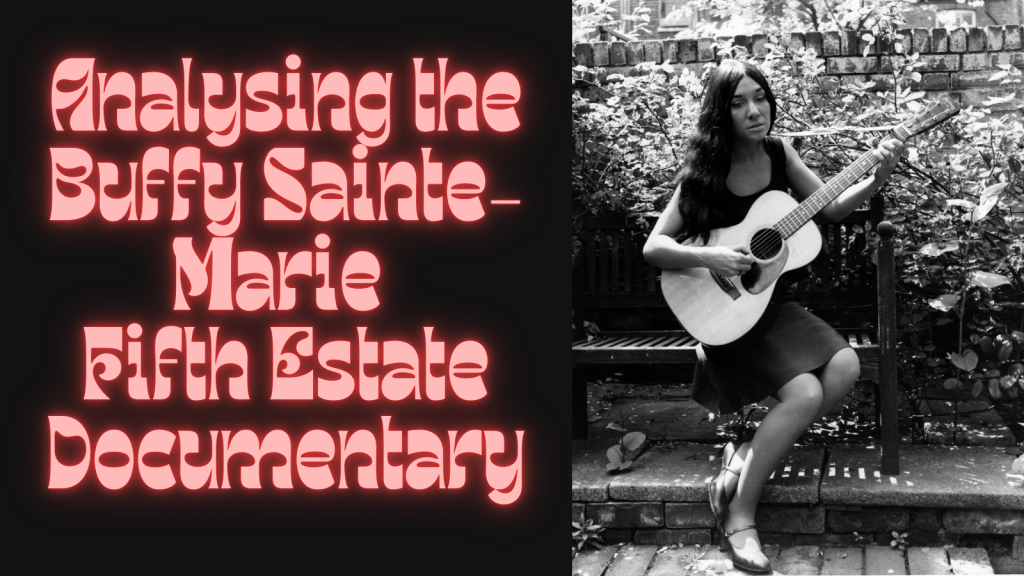
I saw Buffy Sainte-Marie trending on Twitter and it was not for positive reasons. The beloved American/Canadian folk singer was recently the subject of a CBC Fifth Estate documentary that answers the question: “Who is the real Buffy Sainte-Marie?”. The bombshell is that they found her birth certificate that shows she was born Beverly Jean Santamaria in Massachusetts to Italian-American parents, Albert and Winifred Santamaria, hence where the Sainte-Marie comes from. The documentary shows interviews with some of Buffy’s relatives who accused her of lying about being adopted and having native ancestry. Was my blog post about Native rock stars wrong about her? Is one of the most famous singers in Canada not really Canadian and not really indigenous? Well, here’s the CBC documentary. I highly suggest you read other sources, think critically, question what you read, and come to your own conclusions.
If you prefer to read rather than watch a documentary, there’s a companion article from the CBC.
Not the first or last time someone in show business (allegedly) made up some elaborate lore about their background. That’s par for the course. It’s marketing. Celebrity is all about fantasy. Actors and musicians lie about their ages all the time. Models and actresses lie about their measurements. A lot of male celebrities lie about their height. Some celebrities queerbait and pretend to be gay or bisexual. Jewish celebrities adopt Anglicised stage names and may downplay their Jewish heritage. Some mixed actors passed as white. But it’s quite different to lie about your ethnicity, right? Especially when you’re pretending to be an ethnicity that has been oppressed and marginalised for centuries. And when you modify your appearance so much that it’s brownface, even worse.
Why I want to believe Buffy Sainte-Marie
It hit really close to home. I’ve said this many times, I’m mixed race, half Latin American. Venezuela has legitimately bad record keeping. To do genealogy as a Latin American is difficult enough as it is. It’s especially worse for my family because my great grandmother was an orphan and was born out of wedlock, so there will always be unsolved mysteries, and with people not wanting to talk about the past, it’s even harder to uncover the truth. I know nothing about my great grandfather besides his name and the fact he was of Amerindian descent and had green eyes. He didn’t raise my grandmother and didn’t even give her his last name. He did not recognise her as his child even though she definitely took after him. My mum only met him once in the 70s when he was dying in hospital. Usually in Latin America, people have two last names – not my great grandmother or my grandmother. I did manage to find some records from my mum’s side (more from grandpa’s side than grandma’s), but it didn’t answer a lot of questions I had and it was a difficult search because everyone on that side has common last names. So a lot of what I know about my mother’s side of the family is a guess and vague information. I’ve had my mum’s family tell me I know more about the family than they do. You could say I’m a bit of a Nancy Drew. In Venezuela a lot of people have no interest in family trees and they view race very differently than Americans do. People on average in Venezuela are more mixed than in the US, but they don’t divide themselves by race, but rather are more universal and say that we’re all Venezuelan regardless of skin colour.
It’s only human to want answers and genealogy is fascinating. You can see why given my background I really want to believe all of Buffy’s claims! I know how bad record keeping can be. I watched her statement on Instagram and read her statement on Twitter, and I think it’s fair to watch the CBC documentary for myself so I can see all the different sides.
When I looked at photos of Buffy, I saw a lot of similarities in features to my Mestizo (Latinos who are mixed white and native) Venezuelan family: same dark skin tone and the same thick, pin straight black hair. I see some resemblance between Buffy Sainte-Marie and Joan Baez, who is half British, half Mexican, and no doubt would have at least some indigenous ancestry. I have autism and I’m not the best with faces, so take that with a grain of salt. I wanted to give benefit of the doubt, I know that mixed people can really look like anything – in Venezuela there are entire families that look like a UN meeting or a really diverse looking university brochure. I’ve never seen an Italian that looked like Buffy and I’ve been to Italy a bunch of times. I think she looks like she could be Latina. I have some cousins who are mixed Italian/Venezuelan and maybe I can see some appearance similarities between Buffy and those family members. Is it possible that this was all just Hollywood-style makeup? A screenshot of a Facebook comment from Cody Wolfchild, Buffy’s son, says that his mother is half Italian, half English and that she dyed her hair and wore makeup to darken her skin. He also said that his mother lied about being Native American as a child in response to people bullying her for her appearance. It appears this is a legitimate screenshot so I’ll share the Facebook post and you can read Cody’s comments and some new ones he made recently. I definitely think you should read this in addition to the CBC article to get some context and some perspective that might be missing from their investigation.
Unpacking Investigating Buffy Sainte-Marie’s claims to Indigenous ancestry
Let’s do a bullet point summary of the documentary in case you’re like too long; didn’t watch.
- Buffy Sainte-Marie has been in the industry since the early 60s and is beloved in both Canada and the United States for her songwriting, singing, and Indigenous activism. She has won many awards for her work and is a very intelligent woman, no doubt.
- Since her debut in the 60s, she’s made some claims about her background saying that she was born in Saskatchewan on a Cree reserve, didn’t know her biological family, all the records were lost, and she was scooped and taken away and adopted out to a white family in Massachusetts. In all fairness to Buffy, she has kept the story relatively consistent since the 60s. So it’s understandable why people wanted to believe her story. It’s an inspiring one for sure, that is if it’s true.
- Alongside her music, she has done a lot of activism and participated in protests. She always makes it a point to talk about indigenous issues. She educated people of all ages on indigenous issues.
- She doesn’t claim to know everything about her background and a lot of the details are hazy.
- There was a PBS documentary about her that aired last year and an indigenous journalist named Jacqueline Keeler found her claims to be sus and very common among “Pretendians” (people who pretend to have Indigenous/Native American ancestry, usually white, but can be any other ethnicity – I don’t like this term). Keeler claimed that Sacheen Littlefeather faked her indigenous ancestry and found a record of Buffy Sainte-Marie on the Massachusetts birth index, which proves she was born in Massachusetts. Academic Kim TallBear agrees with Keeler.
- She grew up in a predominantly white town just outside of Boston. The documentary shows some never before seen home videos of Buffy’s childhood and her with her siblings. The family are shown celebrating Thanksgiving and having dinner.
- Her cousin says her family were baffled by her claims of being Indigenous and that they were told she was lying about being adopted. Early on in her career, her uncle Arthur told the local newspaper she had “no Indian blood in her”.
- When the CBC asked the Saskatchewan government for a statement on Buffy Sainte-Marie’s claims of records being lost, they said it was unaware of any destroyed or missing records.
- The CBC travelled to Stoneham, Massachusetts to find Buffy Sainte-Marie’s birth certificate and found that she was born in the US to Albert and Winifred Santamaria and she and her parents were all classified as white. The clerk working at the town hall, Maria Sagarino, who found the birth certificate confirmed its authenticity and says that anyone saying she was born in Canada is misinformed.
- While Buffy Sainte-Marie herself rejected a request for an interview, her lawyer said that it’s common practice for children adopted by parents in Massachusetts to be issued a new birth certificate in the name of their parents and that the Canadian government destroyed adoption records. The woman working at the Stoneham town hall disagrees with this claim and says that the Santamarias are Buffy’s biological parents.
- The CBC found other documents corroborating the claim that Buffy was born in Stoneham like a life insurance policy taken out on her by her parents, the 1950 Census, a military document from her older brother Alan, and her 1982 marriage certificate to Jack Nitzsche.
- The CBC looked through a bunch of articles and found inconsistencies about which tribe she was from: Algonquin, Mi’kmaq, and Cree and no mention of her having native ancestry until 1961. One article claims she was born in Maine. Mi’kmaq, Algonquin, and Cree are from different regions of North America. There are also contradictory claims about her birth and biological parents with some articles reporting her biological mother is still alive and others saying she died right after giving birth to her. In more recent years she says that she doesn’t know anything about her birth and she doesn’t know if she actually came from the Piapot First Nation, but they became her family regardless.
- Buffy attended a powwow and met Emile Piapot, who took her in.
- Albert and Winifred Santamaria did not speak publicly about Buffy’s indigenous identity. Her sister Lainey is the only living immediate family member, but she said that her parents never suggested Buffy was adopted. Her cousin Bruce said talking about her identity was taboo in the family and generally there was a feeling of don’t argue with her about it because you’ll only start trouble and she could sue them and because she has money and they don’t have as much money, there you go. Bruce was advised by his mother not to talk to the CBC but spoke to them anyway against her advice.
- Buffy Sainte-Marie claimed to have been blacklisted by the industry in the 70s and the government suppressed her music.
- Finally, one more Sainte-Marie speaks out and it’s Buffy’s niece Heidi. She says that sometime in the 70s, Buffy and a PBS producer bumped into her brother Alan while he was working as a pilot. Buffy said to the producer that Alan was her brother. Alan later got a call from a producer at PBS (the network that Sesame Street is aired on) questioning Buffy’s indigenous identity because Alan didn’t “look indigenous” and Alan responded that he wasn’t indigenous and they have the same parents. Alan then started writing to papers calling out Buffy’s stories about being indigenous as fabrications and that she was really half Italian, half Yankee and not adopted, but these letters were not published in the papers he wrote to.
- When Buffy found out what Alan said to the PBS producer, she had her lawyer write a cease and desist letter to him that basically was like stop what you’re doing or I’ll see you in court.
- She also wrote him a letter accusing him of sexual abuse and said that she would expose this information in the media if he didn’t stop speaking to the media. Alan said in a letter to his parents that he will back off because he doesn’t have the money to fight Buffy in court, but believed that the truth would come out someday.
- Buffy Sainte-Marie did not tell her story about being a survivor of child sexual abuse until later in her career. Years after Alan’s death she came out publicly in an authorised biography, claiming that Alan sexually abused her as a child. She told this story again in more detail in that 2022 PBS documentary. Heidi thinks that her aunt falsely accused her father Alan.
- Buffy announced her retirement from public performances this past summer.
Wow, that’s a lot. Well, I think some counterpoints are that research was more difficult to do in the 60s because there was no internet back then and it was very common for reputable publications to make mistakes and have wrong information. I saw inaccuracies all the time in vintage magazine and newspaper articles, whether it was names being misspelled, incorrect information about their family, wrong birthplace, birthdays being wrong, band members being mixed up, quotes being misattributed to someone, or sometimes in interviews the musician would take the piss and give a deliberately wrong answer and the publication would take it as gospel. Sloppy handwriting when taking notes in an interview and recordings sounding garbled can also result in inaccuracies. I also don’t know why Buffy not claiming indigenous heritage as a teenager or child (or at least no written record of it anyway) would be used as a gotcha here because she was not famous before the 60s and there was no social media back then and it was common for non-white people who passed as white to pretend to just be white. Does someone always have to talk about being indigenous to be indigenous? I also counter what one of the interviewees says about people rejecting their family of origin and that being harmful to the family. I think there are many valid reasons to go no contact or low contact with your family of origin and it is not my place to tell someone they are wrong to cut ties with their family. You don’t know what goes on behind closed doors.
I did find a Facebook post from Lainey of a DNA test saying that she has indigenous ancestry and no Italian ancestry and if Buffy is her biological sister after all, then that should mean that she has indigenous ancestry too. Buffy never took a DNA test and I don’t think she should have to. Many indigenous people are critical of DNA tests and don’t think they are the be-all end-all of indigenous identity and it’s more about community than blood. I can definitely understand this perspective because a lot of gentiles are finding trace amounts of Jewish DNA that they didn’t know about and while I wouldn’t say they are suddenly Jewish now and I think being Jewish is about identity and upbringing and not about blood, I encourage them to explore that side of their background if they so wish to and I support them in that journey as long as they are sincere and respectful.
How come they didn’t explore the Santamaria and Kendrick lineage to ensure that they are really Italian and English? Why didn’t they check the Ellis Island records? Why is it that white people’s ancestry isn’t scrutinised like indigenous people’s is? Why are indigenous people the most scrutinised? Isn’t the status card a system created by the white man? Were indigenous people consulted when this system was created? Weren’t there discriminatory reasons to revoke someone’s Indian status? Isn’t this system a form of segregation? We take someone’s word for it that they’re white, but we look at someone with suspicion if they say they’re native? Is that not racist? That sounds pretty racist to me!
It doesn’t surprise me if Buffy was indeed blacklisted. I believe Buffy there. The FBI and CIA definitely have files on entertainers. We know this is true. The establishment sees musicians who write protests songs as a threat.
I wonder if some voices and some things weren’t included in this. It’s very important to consider biases, framing, agendas, and motives. I often find in the media there are key omissions and I know from my experience interning at a TV station and having a journalism MA that the interview clips are edited snippets and the interviews conducted for these programmes are a lot longer than what’s shown. Obviously, the journalist asks questions, but the questions that prompt those answers in the interview clips aren’t shown and someone can answer a question very differently depending on how it’s framed. Leading questions exist. Loaded questions exist. I can understand why some indigenous people can be hesitant to talk to the CBC, which is run by the Canadian government (colonialism!). How many indigenous people were involved in this documentary? Were there indigenous journalists and researchers working on it? Were they from diverse backgrounds? There’s many reasons not to trust journalists and as someone who studied journalism, I understand why people aren’t very trusting of journalists. Here’s a good quote from Buffy’s Piapot family:
“Think about whose voices are included in this story, whose voices are not included in this story and why did that happen? And most importantly, who is telling this story? What is their track record for telling Indigenous stories?”
There’s an interesting thread here from someone named Dan Voshart who responds to a lot of the claims in the CBC documentary in detail. I highly suggest you read it to get a different perspective.
I also recommend reading these two articles by Lori Campbell, who is a Two-Spirit Cree-Métis activist and the Associate Vice President (Indigenous Engagement) at University of Regina. She wrote an article about the impact that the Buffy Sainte-Marie story has on indigenous communities and she was interviewed on a podcast. Definitely give this a read and a listen too.
Unpacking Buffy Sainte-Marie’s Statement
Like I did above, here’s a bullet point summary of what she said:
- She is sharing her story as she knows it and has been doing so for 60 years
- She is a proud member of the native community with deep roots in Canada.
- She says she is lucky to have two families: the one she grew up with in America, and her Piapot family in Canada, and she loves them both.
- She doesn’t claim to know everything about her origins and background.
- She maintains that she doesn’t know where she’s really from or who her birth parents are or how she ended up a misfit in the town she grew up in.
- She is at peace with the fact that there will be things she will never know.
- She still claims her growing up mother was part Mi’kmaq and that she told her she was adopted and is of Native American ancestry.
- She shares for the first time that she may have been “born on the wrong side of the blanket”, meaning born out of wedlock.
- She started living on her own at 17 and travelled the world and saw communities that few would travel to. She elevated their voices and championed causes that few knew about.
- Her native family are her chosen family and they took her in as an adult in accordance with Cree law and traditions and they claim her as their own.
- She says there are native people and survivors of abuse who feel her story resonates with them.
- She maintains that this has always been her truth and she feels hurt by these questions about her background and even more importantly that these questions hurt others just like her, with similar stories.
- In conclusion she says “I know who I am and I know who I love and who loves me and I know who claims me”
I can see why it feels like a violation of privacy and really intrusive to her. You’re looking for someone’s birth certificate when there’s way bigger issues in the world. There’s a genocide going on in Gaza, climate change, there’s missing and murdered indigenous women, billionaires exploiting the working class, a cost of living crisis, and Canadians not being able to afford to buy a house, and you’re more concerned with someone allegedly pretending to be indigenous? This feels like a distraction from the real problems in society. I have to say, if being offended by some celebrity is the biggest problem you have your life sounds pretty privileged to me. Meanwhile, there are people out there who don’t have clean water, healthy food or enough food, jobs, enough money to live off of, savings, adequate shelter, healthcare, or any of the necessities. It is weird seeing white people and white institutions determining who is or isn’t indigenous and what being indigenous means, given the history of colonisation. How much indigenous representation is there at the CBC? How have the CBC represented indigenous people and indigenous stories?
On the other hand, Buffy Sainte-Marie is a public figure and has been in the spotlight since the 60s and there is public interest in her. She doesn’t have the same expectation of privacy that a private individual has. Her indigenous identity was a big part of her image and fame as a singer and it helped put her on the map. If she isn’t really indigenous, then any awards and recognition she won were basically stolen from real indigenous creators.
I will definitely agree with her that blood doesn’t mean everything and chosen families are valid. I’m 100% with her there. Many LGBT people have a chosen family, RuPaul said this: “We as gay people, we get to choose our family and the people we’re around”. In the LGBT community we have a sentiment of, hey if your family don’t accept you, screw them, we’re your family now. Some people with chosen families still keep in touch with their family of origin, while others cut ties and whatever you choose, it’s a valid choice. Do what’s best for you. I have family members who are adopted and I see them just as much family as family members who are blood related to me. In fact, I would say I’m closer to some of my adopted family members than I am to some of my blood related family members. Heck, when you get married, you get another family. I have an incredible mother-in-law, who has always made me feel at home and made me feel like family. She has the biggest heart and always has gone above and beyond to support me and my husband. Pets are family! I love my cat, Bowie, and I see her as my daughter. My husband is incredible, we’re best friends and I see him as chosen family too. A lot of people have friends that were like the siblings they never had. There’s no one correct way to have a family. Families come in all forms. Family means different things to different people.
There is also something to be said about how culture isn’t just about what you’re born into, it’s also about lived experience and how you were raised. If you weren’t born in a country, but you spent enough time there to become a citizen, are you not from that country? My mum isn’t American by birth, but she’s spent over half her lifetime in America and has assimilated and learnt English. I think she very much is American, even with her heavy accent. I became an Irish citizen and when I did, I mostly saw Irish people saying congratulations and you’re one of us now, no matter what anyone says (my husband assures me of this all the time). Sure, I didn’t have an Irish upbringing and I sound mostly American but a bit off, but I spent nearly a decade there and it shaped me and I learnt about the culture. And I definitely can say I know more about Irish culture than most Irish-Americans, no tea no shade. My dad grew up in a city that had a large black population and he had a lot of black friends who made him feel welcome and he got really into the culture and when he went to university, he was part of the Black Student Communication Caucus. He spent a lot of time around Mexicans and Venezuelans and learnt to speak Spanish fluently and you couldn’t clock his accent as Anglo and Latin Americans mistake him for Latino. My dad never once said that these cultures are his or these identities are his own. If he was to act like he’s black or Latino, that would be a lie. But to say that African-American and various Latin American cultures didn’t have an influence on him at all is an even bigger lie.
Even if Buffy wasn’t born or raised in Canada, I think she is Canadian and can identify as such. Canada is a country that prides itself on its diversity and welcoming immigrants and Canada is an important part of Buffy Sainte-Marie’s story.
As for her claiming that her brother sexually assaulted her, shame on her if she’s falsely accusing him. If that is a false accusation, I’ll lose all respect I had for her, that is scumbag behaviour and hurts actual assault survivors. However, any detractors who are like “why did she wait until the 70s to say anything about it?” and “why didn’t she go to the police?” can shut up because that’s rape apologia and is setting the feminist movement backwards. There’s many reasons an assault survivor or rape victim may not want to say anything. Be careful what you say, please. Buffy Sainte-Marie may not see what you’re saying, but your friends and family and fellow human beings who are assault survivors will.
As for the Piapot First Nation, they have made a statement defending Buffy Sainte-Marie calling her “Auntie Buffy” and calling the accusations ignorant, colonial, and racist. They said the Canadian government, media, or any other institutions have no right to tell them they can’t decide who is a member of their family. They say that Buffy is their family and Buffy chose them and that holds more weight than any paper documentation or colonial record. Right on! Family is about connection and love, not about blood.
Buffy Sainte-Marie is without question an activist who has done a lot for indigenous people and has raised awareness of issues indigenous people face. The work she’s done and all those accomplishments, I can’t take that away from her. She has some good intentions and overall I think she wants to make the world a better place. I can’t take her musical talent away from her either. She’s a brilliant songwriter, talented musician, and intelligent woman no matter what. I don’t care what ethnicity she is. If anything, it’s more racist to deny her talent or think lesser of her as a musician because she may not be indigenous. There are talented and intelligent people of every ethnic background.
I don’t doubt that the CBC put effort into their investigation and they have a team of lawyers and editorial staff who gave this the green light. Big claims require big proof and they found some proof in a birth certificate and testimonials from her family. I don’t know what the defamation laws are like in Canada, but if they’re anything like the US, then the burden of proof would be on Buffy Sainte-Marie to prove that the CBC are lying. If Canada takes after Europe, the burden of proof would be on the CBC to prove that their claims about Buffy Sainte-Marie are true. Canadians familiar with media law, feel free to chime in!
Why this matters
Well, speaking from my own personal perspective, I’ve been accused of lying about being mixed many times and every time I see a story like this where someone pretends to be a different ethnicity, I think about how it ruins it for people who really are mixed. I’m not representative of what my family look like and I acknowledge this. I know I would stand out like a sore thumb if I were to take a group photo with my mother’s side of the family because I’d be the palest one in the picture and I’d be one of the tallest ones. I feel gaslit whenever I am told I am really just white and nothing else. Am I supposed to reject my Venezuelan family, which is half of my family (or really more than half because that side of my family is way larger than my dad’s side), all because I apparently “don’t look like them”? Is it my fault that I don’t know much about my native ancestry and that Venezuela doesn’t have the same system that the US and Canada have and the grand majority of people of indigenous ancestry in Latin America (which is basically most Latinos) have no clue what tribe their ancestors were from? Heck, most Latinos don’t know where in Spain their ancestors are from, unless the immigration is recent. Isn’t it colonialist and racist to whitewash someone of indigenous ancestry because they don’t conform to a certain standard? Are all my memories of being made fun of for being mixed and people making fun of my grandmother’s native features all made up? I haven’t stepped foot in Venezuela since 1997 (I luckily have some vague memories of that visit during Christmas) and have only seen my family from there on few occasions, are they really my family? Is it my fault that Venezuela is a dictatorship and unsafe to travel to? I have OCD and whenever I have this obsession, I compulsively look through the family photo albums to confirm to myself that my family are who they are. I’m not a fraud!
But this issue isn’t about me. This is about indigenous people who have lost out on opportunities because of people faking their ancestry snatching up awards and grants that were supposed to be guaranteed to them. It’s like another form of colonisation. This is about indigenous people who felt like they had to hide their ancestry because of racist bullying and mockery and now all of a sudden they see someone who isn’t indigenous appropriating their culture and background and getting celebrated for it. It’s basically stolen valour. It’s hurtful.
However, there are some indigenous people calling out the “Pretendian hunting” going on in the media and say there’s bigger issues indigenous communities are dealing with. Some indigenous people say there’s a lot of misogyny in these accusations because it seems like those who do that always go after women. And there’s definitely anti-black prejudice in there too with a lot of people who are mixed black/indigenous getting doubted about their indigenous side. There’s no wrong way to feel about this and I think these are all important perspectives for a discussion.
So was this all just a 60 year long Indigenous Like Me?
John Howard Griffin’s book Black Like Me, is a groundbreaking book written in 1959 and published in 1961 where a white journalist named John Howard Griffin takes pills to darken his skin and goes undercover as a black man living in New Orleans and travelling through Mississippi, Alabama, Georgia, and Arkansas to write a book about the realities of living as a black man in the South. Talk about walking in another person’s shoes! By today’s standards it would be offensive. Why not listen to actual black people? But you have to remember how conservative a time the 60s was. You gotta do whatever it takes to get people on the side of Civil Rights! This book was definitely eye opening and sparked discussion and it was supported by a black publication called Sepia magazine. Griffin never changed his name and he was honest if someone asked him about what he was doing. But a lot of people who knew Griffin as a white man didn’t recognise him with dark skin. He got death threats and had to move to Mexico for a time to stay safe, but he also got a lot of letters of support and he became famous for this book. He wasn’t the first or only person to do this. A decade earlier, a journalist named Ray Sprigle travelled to the south disguised as a black man for a month. Would I say that John Howard Griffin and Ray Sprigle were evil? No. It was a different time.
Buffy Sainte-Marie made her debut on the folk scene a little bit after Black Like Me and during a time when non-white and mixed Americans were growing more in prominence. It was a difficult time to be a non-white or mixed woman in music. Not only would you be dealing with sexism, you’d also be dealing with racism. Being white was “easier” and white privilege was very much a thing then. As said earlier, she was adopted by the Piapot First Nation in Saskatchewan in accordance to Cree law and they have made a statement standing by her. In Native American communities, being Native American isn’t about what percentage blood you have or your appearance, it’s about connection to the community. I don’t think the Canadian government should get involved at all. It’s absolutely not their place.
Native Americans have every right to feel whatever emotions and you’ll find Native Americans with different opinions across the spectrum from being offended and upset by Buffy Sainte-Marie to still being fond of Buffy Sainte-Marie and believing her to not caring at all one way or another. No group is a monolith. It’s racist to assume that indigenous people all feel one way or should feel one way or another (just like it’s antisemitic to assume all Jews are pro-Israel or No True Scotsman-ing Jews critical of the occupation). We are all individuals at the end of the day.
I don’t think Buffy Sainte-Marie is evil. I think she has done a lot of valuable work and advocacy for Native Americans regardless and I don’t think you can take that away from her, no matter what her ancestry is. I think she’s authentic in her support for indigenous communities and I think that counts for something. She spoke about these issues before it was cool to talk about them and she did it knowing that it could hurt her career. She definitely has courage. The media loves to build up celebrities and put them on this really high pedestal only to knock them down, that’s what I’ve noticed a lot in the media.
I think we should also explore the possibility that this campaign is a smear because regardless of her background, she has done a lot to advocate for indigenous people’s rights and she is anti-establishment and the establishment don’t like people who speak out against them. At one point, she was blacklisted in the industry so it’s not far-fetched to think that some people have it in for her. However, Occam’s Razor – the simplest explanation is the most likely, how likely is it that there’s a conspiracy to bring down Buffy Sainte-Marie? Is this really just a story for clicks? Is it possible that the Massachusetts birth certificate is a fabrication? Is it possible that adoption records were sealed? Is it possible her relatives were lied to about Buffy being blood related? Were some of her relatives hungry for clout? Were they bitter about her success? Were her family and others really conspiring against her? Were these family members in the documentary all paid to talk shit about her? How did J. Edgar Hoover not know this? Why wait until now to expose her? Is the truth somewhere in the middle? This documentary asks more questions than it answers the more I think about it. This is a rabbithole.
I’m torn. I’m confused. I don’t care if she’s indigenous by blood or not, if the Piapot First Nation says she’s a member, I’ll take their word for it over the white man or any colonial institution. Buffy Sainte-Marie is a talented musician and a great activist and I can’t take any of that away from her, indigenous or not. The board of the 60s Scoop Legacy of Canada released an open letter to the CBC expressing how harmful the Fifth Estate documentary was to survivors of the 60s scoop and asked for the CBC to apologise to Buffy and all indigenous adoptees. They called the documentary one-sided, unbalanced, and sensationalistic and said that indigenous people are the only ethnic group in Canada who have to prove their identity with an ID card, still a form of colonisation. They pointed out the research in the CBC documentary is full of holes. Here’s a clip from APTN about that.
I think instead of dragging her down, let’s signal boost indigenous musicians and activists and amplify their voices. I don’t know how “Pretendian hunting” exactly helps indigenous people and improves their material conditions. Great, you called someone out for pretending to be Native American, you sure ended racism, you sure ended poverty and inequality! I’d rather just focus on the real issues that matter: healthcare, housing, the economy, the environment. Things that affect all of us. At the end of the day, we’re all human and that’s the truth. Regardless, question what you read, think critically, and think for yourself.
Loved this blog post and want to support and see more? Donate to The Diversity of Classic Rock on Patreon or Paypal or follow me on Facebook, Twitter, or Instagram, click the follow button on my website, leave a nice comment, send your music or classic rock related books for review, or donate your art and writing talents to the blog. Thank you for the support!
You can also download the Brave Browser and earn tokens that you can donate to your favourite creators (including me!), donate to charity, or you can keep them for yourself and redeem them for cash. The choice is yours! Thank you!


 The Diversity of Classic Rock
Leave a comment