
Introduction:
Here on The Diversity of Classic Rock, I love to share all sorts of classic rock stories with you whether it’s the most famous bands or some more obscure ones. At the top of my website you’ll see it says “Classic rock: more than meets the eye and ear”, and what I mean by that is that to truly get an appreciation for the music of the classic rock era, you need to listen to more than just the most popular bands that get all the attention. We’re very lucky to have a great power pop musician, Arthur Alexander, here on the blog to tell his story and let me tell you this, it’s an incredible story and by telling these stories, we document classic rock history. It’s a real privilege to be part of preserving classic rock history and sharing these stories with you. In short, here’s a little background information on Arthur to put the interview in context:
Arthur Alexander’s story begins in Poland, and his story is an immigrant story and a rock and roll refugee story. He grew up in Warsaw and heard rock and roll on the radio and he got into it and formed his own band. He loved all the British rock and roll bands as well as American rock and roll music from the 50s and Bob Dylan’s folk rock protest music. Keep in mind in the 60s, Poland was a satellite state of the Soviet Union and people weren’t as free to enjoy rock and roll like they would be in Western Europe or the US or Canada. As much as the government tried, they couldn’t stop young people from finding rock and roll. Why were they so afraid of rock and roll? Because it showed youth that there was a different way and rock and roll stood for freedom and individuality. A young Arthur sang some protest songs, the government found out what the content was and essentially he was ousted. He became a rock and roll refugee and so he went to America in the late 60s to follow his dreams. In the 70s, he was in two power pop groups, The Poppees and Sorrows.
The Poppees: The most Beatlesque band you’ve never heard of… or Wait… this isn’t The Beatles?
The Poppees made Beatlesque power pop and in my opinion they sound the most like The Beatles of any rock band I’ve heard. Everyone talks about how Badfinger, The Byrds, Big Star, and ELO were like The next Beatles – they’re all great bands – I love all of those groups, but they combined Beatles influences with something else and didn’t quite sound a lot like The Beatles. The Poppees on the other hand, give their music a listen and you’ll be like “Wait this isn’t The Beatles?” and “Wait this isn’t from the 60s?” – It’s got all the Merseybeat like traits from the guitar sound, the beat, the vocals, to the “yeah yeah yeahs”. It wouldn’t sound out of place on Please Please Me, With The Beatles, and A Hard Day’s Night. The only other group I can think of that replicated The Beatles trademark Merseybeat sound were Canadian rock band Klaatu, who came out after The Poppees and were more influenced by The Beatles’ later psychedelic material and their sound is clearly more 70s. The group were active from 1972 to 1975 and were signed to Bomp! Records and released only two singles. They famously played at CBGB and Max’s Kansas City. You name the famous band that came out of the mid 70s, Arthur knew the band members! Because of differences between the band members, they split up and so Arthur formed Sorrows.
Sorrows: Not to be confused with the British rock band *The* Sorrows.
People reading this blog post who are familiar with British rock and roll of the 60s might be confused and mix the New York based Sorrows band of the 70s with the Coventry freakbeat band The Sorrows. Don’t worry, even music industry people mixed the two up. An important distinction is that the band Arthur formed were just simply Sorrows, no “The” at the beginning. He formed Sorrows with his Poppees bandmate Jett Harris (yes, his stage name is a reference to The Shadows bassist Jet Harris) in 1977 and with a new band came a new sound: ABBA meets the Sex Pistols, a more new wave form of power pop with a bit of punk. To me, it’s a natural progression and evolution from The Poppees. Still, if you want something reminiscent of it, “Teenage Heartbreak” has those Beatles influences in it with a touch of new wave and punk. Sorrows released two albums, Teenage Heartbreak and Love Too Late. They got signed to Pavillion Records, who were distributed by CBS Records.
The former had a great sound, but the seemingly promising follow up was such a disaster that it broke up the band, as Arthur will talk about in the interview. What was supposed to be a big opportunity working with Shel Talmy resulted in an album that was in shambles and Arthur held nothing back in his interview. Just one of many stories of musicians getting screwed over by the industry. He did the band dirty. It was an album Arthur wasn’t proud of, to say the least and decades later Arthur finally spoke his truth in a documentary released by Big Stir Records and he finally re-recorded Love Too Late the way he wanted to, as a way of reclaiming the album. Not unlike Taylor Swift with her Taylor’s Version remakes of her albums or Tony Valentino with Dirty Water Revisited.
The documentary opens with Arthur Alexander saying that “this album is literally drenched in proverbial blood” and that he’s finally speaking his truth after 40 years. He formed the band as a collaborative effort and made it clear that it isn’t just his band. The format is three vocalists, no lead guitarists. While Sorrows weren’t part of the in-crowd and didn’t have the extreme punk look, they were still loved by the bands from that mid 70s NYC scene: The Heartbreakers, The Ramones, and Blondie. They had success with their first album Teenage Heartbreak and when it came time to release their follow up album, they were told that Shel Talmy, who had worked with The Kinks, The Who, The Easybeats, The Creation, Manfred Mann, Amen Corner, and Pentangle. Arthur, who is a huge fan of that British 60s scene, was nerding out and really excited about this prospect because he worked with his idols. It also meant going to London to record the album, following in the footsteps of your idols. The trouble started at the airport when it was discovered they didn’t have the proper work visas to record an album and so Arthur had to tell a white lie so they could all be allowed in the country. However, once they met with Talmy it was disappointment after disappointment. He was disorganised and used studio musicians instead of Sorrows themselves, how insulting! The result was an album that didn’t sound authentic and would leave fans disappointed. Everything that made Sorrows what they were was stripped away. Arthur described the sound as Doobie Brothers meets Manilow on a bad night. The band were helpless and stuck far away from home with no idea what to do. They stuck it out in the hopes of hard work paying off and there being a reward later, but they were unhappy with the final result and disavowed it. It ultimately led to the breakup of the band because of disagreements between the band and the label and the fact that none of the songs could get airplay on the radio and sales were poor. To put it bluntly, what Shel Talmy did to the album and the band made Arthur feel violated.
It’s a very well put together documentary and a great thing to watch to get to know Sorrows. If you want to listen to the real album released in 2021 as Sorrows intended for it to sound, you can stream it below. In my opinion, it’s very well done and great for fans of The Jam, The Real Kids, Rubinoos, The Clash, and The Barracudas – my favourite tracks are “Christabelle”, “Love Too Late”, “Play That Song On The Radio”, “So Much Love”, and the Beatlesque “Breaking My Heart Over You”. Don’t waste your time with the fake, overproduced, toothless, soulless album released in 1981! This is the Real McCoy!
One of those albums that could have been a success had it been done the way the band intended, which is why I say this is some of the best power pop you’ve never heard.
From that point onwards, Arthur continued working behind the scenes in music and entertainment, and later returned to performing. In 2018, he released a solo album called One Bar Left. It has a garage rock/blues rock sound in addition to the power pop energy.
His latest album, Steppin’ Out will be coming out on July 21. The first single from the album, “Woman” can be streamed below. I also liked the Beatlesque “Humming Blues In Four” – there’s also a little reference to Bob Dylan in the lyrics.
If you want to read about Arthur’s journey and learn more about his music, keep on reading! It’s quite a journey full of twists, turns, and drama so hold onto your hats! This is one of the most raw, real interviews I’ve done.
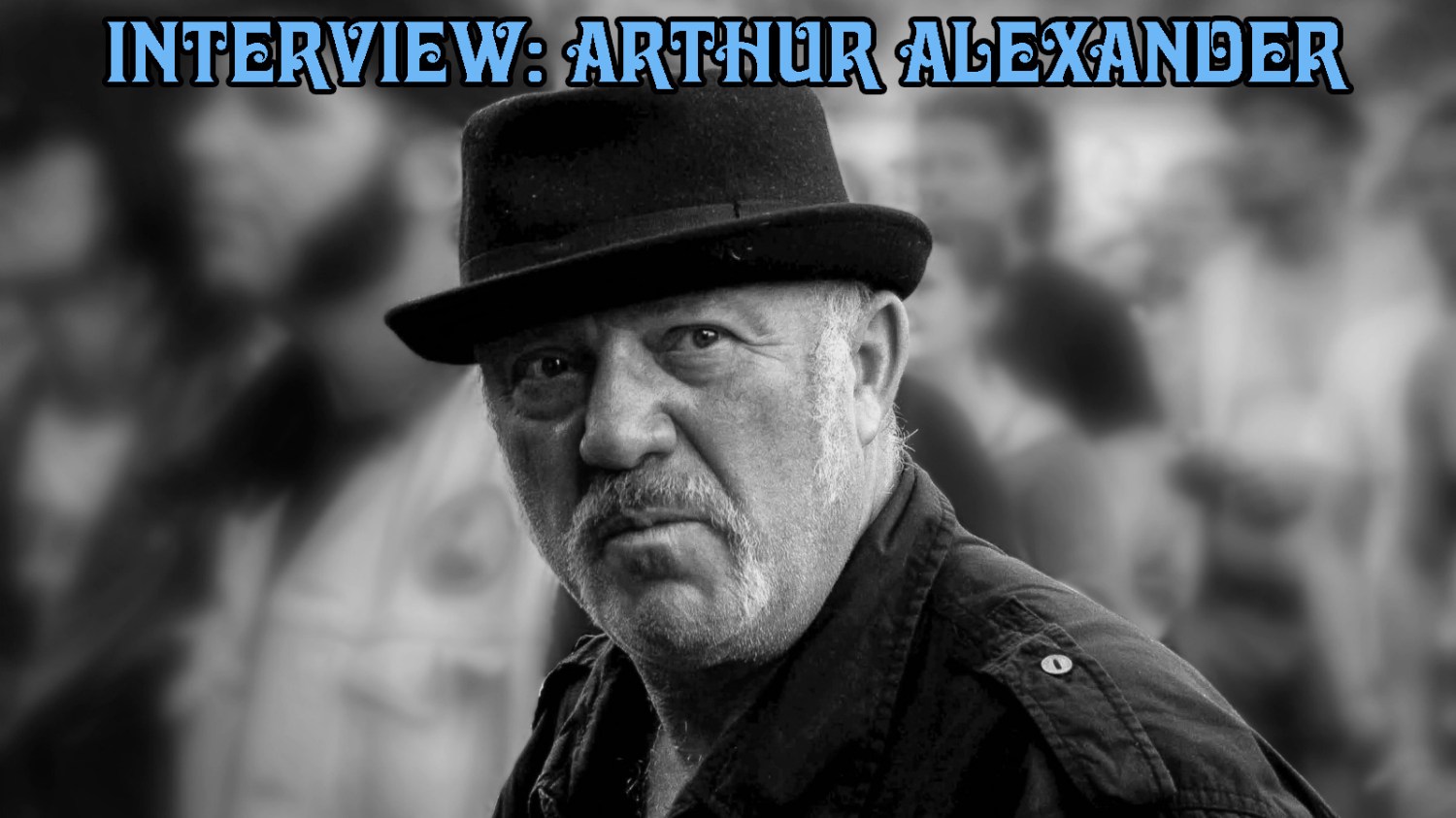
Interview: Arthur Alexander
Angie: How would you describe your music to a new listener?
Arthur: I would say it’s kind of firmly rooted in anything from blues and early rock and roll to 60s music, pop music. You know, when songs ruled. When a song was a song and you could actually remember it. That’s how I’d describe it, I’d say. I write songs that you can actually remember.
Angie: How did you get started as a musician?
Arthur: I grew up in a very musical house. Both of my parents were very much into music. It was a different kind of music. They were both very much classical music lovers. So that was the first music that I heard and as time went on I started hearing other things. I would say probably in the early 60s, when I started hearing all the British bands. It was kind of unusual, I grew up in Poland, which was at that time a communist country. They were not too keen on rock and roll and other stuff so everything that I was hearing would come from the West somehow and we had this thing in Europe called Radio Luxembourg, which was the main source of rock and roll. As it turned out later on I didn’t even know that, but for most of the kids even in Europe, that was the main source of rock and roll music because in England the BBC tightly controlled what was on the radio and rock and roll was either nonexistent or in very minimum doses and it was the same in Europe so I was able to receive Radio Luxembourg signal even though it was very weak because there were all these Russian jamming stations in East Germany trying to jam the signal so that Eastern European youth would not get corrupted by this “evil music” so that’s how I was receiving it. I was completely smitten by it so at the time when bands like The Shadows came out and not to mention once the whole British thing started with The Beatles and everything else, all my other interests fell apart. By then I was playing a little guitar and probably just like every other kid at that time, I decided to have a band and I started playing music and that was the beginning. It never stopped.
Angie: What was it like growing up in Poland back then?
Arthur: In a word it was interesting. Obviously it was a whole different world from what the kids in the West were growing up with. The whole region of that part of Europe was under Soviet rule. For a kid like me, who was into all this forbidden fruits of Western music and everything else it was not very easy. Records were practically nonexistent. You either got them on the black market or somebody brought them from abroad or smuggled something or there’s this thing that you’ve probably never seen in your life, which was postcard records which were literally laminated postcards on which they actually pressed the record of whatever song it was. You would buy a postcard and you would put a postcard on your turntable and you would play that. Needless to say this was nothing authorised. They were just taping or something. I don’t even know how they got those songs to be able to put them on the postcards, but you would literally go to a kiosk to buy a pack of cigarettes and there was a pack of postcards and some of them were record postcards and that was the first time I heard Little Richard and Fats Domino and Elvis Presley and everything else, it was on these little postcards.
Instruments were practically unavailable, there were some electric guitars coming from Czechoslovakia and East Germany. Everything was improvised. When I think about this, what incredible ingenuity it required to even put anything together. Everything was a problem and everything was an adventure. To score an amplifier or guitar strings was… if you scored something you were a lucky guy. It’s not like you went to a music store and it was your choice of this, that, or the other thing. If you were lucky that there was anything there, you just bought it. It was not a question of choice. Just s question of is it there or isn’t. It was fun, but we were determined. I always used to say even back in those days, rock and roll was that thing that was gonna kill that system and sure enough that’s what happened because it was unstoppable. There was quite a difference between different countries like Soviet Union or Poland or East Germany or Czechoslovakia or Hungary in terms of how much “liberty” the government actually allowed. Poland for instance by comparison was practically like Western Europe compared to the Soviet Union. They were really under the boot. In Poland for instance, as years went by in the mid-60s, I guess the government figured out if we allow some of this stuff, the youth are gonna get distracted and not make trouble with everything else. How come we can’t even get eggs in the store? So they’re gonna be busy with rock and roll. So we started getting visits from all these big bands, that’s how I got to see The Hollies, The Shadows, The Stones. There were quite a lot of British bands and foreign bands coming to visit us and that opened up the floodgates. That was the beginning. I was already in a band and playing. We were playing all the covers of all the records that we heard. Sometimes it was funny because we didn’t even speak English so everything was phonetically or what we thought we were hearing and we were writing our own songs by then. I started to write already back then and that’s how it all started.
Angie: Did you learn English through listening to the music?
Arthur: Yes. I was already studying English at the time in high school and when I say studying, it was just the beginning so I had vague familiarity. I was picking up certain stuff, but it certainly helped because I was writing the lyrics down to try to master them. Even if I couldn’t understand, I was trying to pronounce them the way they were saying it or how I thought they were saying it. It definitely helped in the process. I wouldn’t say by the time I left that I knew English. I knew enough to get by. It definitely helped. I was very much attuned to it. I loved the language so I was really keen to learn it. Especially I remember there was a time around 1966 or 1967 when Dylan released this incredible album called Blonde on Blonde. I got really into it and it made me realise this was not just “don’t leave me, I love you”. This was real poetry. Not only was it poetry, but I also realised that a lot of songs were anti-government. This was Vietnam time. A lot of his stuff was what was called back then “protest songs” and in my mind I really wanted to know what he was saying because I figured, if I’m gonna start doing these songs in English, I’m gonna basically be protesting against the government. Nobody speaks English here so they won’t get wise to what I’m really doing. That was pretty naive because they got pretty wise pretty quickly and I paid the price for it. That definitely gave me more of an impetus to learn English so I could actually understand what the hell I’m singing, especially when it came to his songs because I felt it was really important, rather than just singing the words as I heard them.
Angie: You said you paid the price for it. What consequences did you face for performing protest songs?
Arthur: Well, let’s put it this way. When I said I paid the price for it, we started doing this and we thought we were so freaking clever like nobody knows what we’re doing and one time we were rehearsing in this community hall, some kind of a party thing where they gave us a room to rehearse and my band was rehearsing and then out of the blue these three guys showed up in trenchcoats and beat the living shit out of us and destroyed our equipment and said we know what you’re doing, don’t ever f*cking do it again and left. That was it.
Angie: Is that what made you want to leave the country?
Arthur: Well, yeah. By then I already knew that come hell or high water I’m gonna get the hell out of there, whatever it takes. The more this thing went on with the government and the invasion of Czechoslovakia and everything else, I knew that I’m gonna take the first chance I have and just bolt. And then things happened politically and everything else and I guess the party was not very happy about me walking around in jeans, playing rock and roll, and my parents started being harassed about it and how they’re raising their son. That this is unacceptable and this and that. To make a long story short, they basically helped me out of the country, as in they basically kicked me out of the country including my whole family and that’s when we left. I couldn’t be happier.
Angie: Where in Poland did you grow up?
Arthur: I was born and raised in Warsaw.
Angie: Where did you go in the United States first?
Arthur: When I first arrived I went to Chicago and I lived in Chicago for about six months, which I absolutely hated. And then my grandmother was coming from Poland to visit some relatives in New York and so I decided to go over a weekend to see her at least. I went there for a week and I stayed for 21 years. I never went back to Chicago. I walked around and went, “Yeah man, this is it!” Send my guitar, send my suitcase and I never went back, so I stayed in New York for 21 years and then in 1990 I moved to LA.
Angie: You arrived in New York around 1969-1970?
Arthur: 1969, yeah.
Angie: What was it like in New York when you were there in the 70s?
Arthur: I’m sure I have a different perspective from many other people who were basically living there already. For me it was just absolutely overwhelming and intoxicating at the same time. Just the energy of that city, they [don’t] call it the city that never sleeps for nothing. It was like 24/7 action. I absolutely loved it, one one hand. On the other hand I remember it was times of serious financial crisis in the city. Some places looked like a complete war zone, especially as time went into the 70s. The Bronx was really like a war zone, you really couldn’t go there without seriously risking your life. At least in the South Bronx. It was grimy, it was dirty. But at the same time it had that energy and things were happening, which is what I loved about it. Music was happening and shortly in the mid 70s when the whole punk/new wave scene started, which I was a part of. I was there very early on, almost at the beginning. It really put me on a kind of mission to be a part of it because before that, the scene I really wanted to be a part of but couldn’t because I was in Poland, the whole Liverpool and London thing, I was in jail [figuratively]. I couldn’t be a part of it so I felt really energised and excited about being a part of something like this especially since truth be told, the whole New York scene was like no scene that ever had been since then. I was lucky to be part of it. But like I said, that really gave me an energy and a drive, a sense of purpose. I felt like this was the place I was destined to be. Not being able to be a part of the London scene or Liverpool scene back then because I was too young and in the wrong part of the world, I felt lucky and privileged to really be a part of something like this. We still didn’t know what it was going to be and where it was gonna go, but it felt like something is happening and it was ready to explode.
Angie: Did you see any bands that were famous at that time in NYC [that came out of that scene]?
Arthur: When I started with The Poppees it was kind of cool because we were actually playing the so-called Long Island circuit. We bought a whole bunch of equipment and we were an original band. We were writing our own songs, but we didn’t have any equipment so we got a loan and be bought all this equipment and to pay for it we started playing this Long Island circuit, all these lounges and dinner clubs and stuff. We had to play all these covers and all these places were like, “Can you turn it down, I’m trying to eat my steak!” We’re a f*cking rock and roll band. Don’t tell me to turn it down. I only know how to turn it up. It was really frustrating and at some point our drummer’s brother said, “Hey, you know there’s this place in Manhattan called CBGB that just opened up and they have original bands. Maybe you should check them out because then you wouldn’t have to play all this shit. You can just play your music.” So we did that and Hilly Kristal, who owned CBGB, used to hold auditions every Monday night. If you wanted to play CBGB, you had to go through the audition and if you passed he would let you play there on the [weekdays] and as your following grew you got the play the weekends if you were good enough. So we did that and that’s how we started playing there and so when you ask me if I saw any bands, the answer is all of them. We played with The Ramones, Talking Heads, Blondie, Dead Boys, you name it. By the time we started, I think when I saw The Ramones the first time, this was maybe [their] second or third gig when we started hanging out there. We never went back to this old stuff. That basically became our home away from home so to speak. And at the same time other clubs were popping up like mushrooms at that point. There was a whole scene that started happening and we started getting more and more gigs around that time. So basically we just concentrated on those gigs. Of course needless to say ever since we abandoned this other gig, we were starving because we were not making any money. There were nights where after a gig we were splitting $3 between the four of us and the roadie. But it was fun. It was what we wanted to do. We started holding day jobs just to pay off the equipment and everything else so we didn’t have to do this cover gig. We just immersed ourselves into this whole scene and that’s how it all started.
Angie: How did The Poppees form?
Arthur: What happened was one day I was just looking through The Village Voice, a weekly New York magazine and in the back of it they had all these kinds of ads for all kinds of stuff including musicians looking for musicians and that sort of stuff. One day I saw this ad looking for a guitar player and they said something like “must like The Beatles” and I said, “Well, you found one!” I went to audition for them. They were these two guys and they had this kind of a weird concept that I didn’t anticipate. Their whole idea was to basically sound like The Beatles up to the second album and not a day later. That was like their thing, you know. I thought that’s kind of restrictive, but at the same time I was really taken by it. They were writing great songs. I’m listening to their songs and I’m like, they all sound like “She Loves You” and “All My Loving” backwards, but they’re really great songs in and of themselves. They’re maybe very Beatle-y sounding to the T in terms of their devotion to the style and the sound, but as songs go, they were really great songs.
I’ve always been the kind of guy, for me the song is king. I don’t care what you play, if the song is not good I don’t care how good you are or this and that, it’s crap! And these guys wrote really great songs. And I said hell, I like it. It may be a little restrictive, but I really got into it. I loved that music to begin with and so that’s how it started. Then we found the drummer and we started playing out and people really got into it. At first you could see kind of a look of “Jesus! These guys sound like The Beatles!” But we like it and it just took off from there.
Angie: How well liked was that Beatles-like sound in the mid 70s? Did people see it as old school or just see it as something timeless?
Arthur: I’m not sure how to verbalise it because on the one hand there was this whole punk thing starting to happen with safety pins and leather jackets and this stripped down simplicity, raunchy and very raw sound and then there was us, really sophisticated by any stretch of the imagination compared to this stuff. In some sense it was kind of like sight. I’m sure there were some people that basically ignored it or even ridiculed it. Sometimes they would make fun of us saying, we’re like a prefab four, but you know a lot of people liked that. I can tell you every single time for instance, every time we played the places like CBGB or Max’s Kansas City, especially CBGB, every night we’re playing, The Ramones were there, Blondie was there checking us out. They absolutely loved us. You had some other people who were like really hardcore punks and I’m sure those people were not exactly amazed or in love with what we’re doing but basically, this was by any stretch of the imagination, the beginning of what came to be known as power pop because what we started doing is, even though our music was based on the old paradigm of the 60s music, but the energy, the aggression, and the bite that we put in those things was very much contemporary. When you’re in that scene you can’t help but to have that attitude and then [have] that sound rub off on you in some way, only we turned it into our own in our own musical terms. So we were not trying to ape anybody that was on the scene. We were just basically, to some extent being influenced by what was around us, what we were hearing, but applying it in our own way so that our music started reflecting that. So it was not just kind of a happy-go-lucky 60s replication of music. It had a different bite to it, it had a different flavour to it. There were more and more bands that picked up on it and tried to do the same thing in their own way, of course, for better or for worse. Some were pretty good, some were pretty crappy, but the idea definitely took that you don’t have to be like a three-chord Ramones or Sex Pistols, scream or whatever and you can actually try and play what I call pop music, basically. The scene was very varied. You had blues bands, hardcore punk bands, you had arts bands like Talking Heads for instance and you had bands like Blondie which was purely a pop band. They were going exactly for that kind of mainstream commercial sound even though they were also influenced by whatever was going on at the time. They were a little artsy, a little pop, but you could tell this was all within that circuit. We’re all kind of sitting in the same sandbox. Everybody was stealing something from everybody else, that’s the best way I can describe it. In fact, I would say in some sense that whole New York scene was way more varied and versatile than the London scene or the Liverpool scene of the 60 because back then all these bands were playing nothing but cover tunes from their American records that they were getting there and they were just playing, you know, either obscure cuts or hits or whatever, but it was all very much oriented towards American R&B and country and western, whereas the New York scene was very very wide open. Like I said you had bands like The Ramones, Talking Heads The Heartbreakers, Richard Hell and the Voidoids, and us. It just really covered the whole gamut of stuff. That’s how that went.
Angie: What would you say are the most essential power pop songs? If you were to introduce power pop to someone, what would you suggest people listen to?
Arthur: Us, definitely. It’s not that I’m bragging, but we were basically practically the originators of that genre at time. There were bands that I would say, like Blondie would probably be in that category. There was a band from Chicago called Pezband. There was also, remembering this was the time where we didn’t have internet and stuff like that, there was a lot of stuff happening for instance, on the West Coast that we didn’t even know about. Like The Nerves and Paul Collins. I can’t think of anything right at the top of my head. Big Star is considered to be a big power pop band, even though quite frankly… I don’t know. I never kind of managed to get into them. It’s gonna cost me some of my street cred by saying this because a lot of people consider them like a holy grail and I’m sorry but I fail to see that. To each their own.
Angie: Going from The Poppees to Sorrows, can you tell me how The Poppees broke up and how Sorrows began?
Arthur: The Poppees ended basically because, as I said before, we were definitely not part of the mainstream and certainly never were media darlings and part of the inner clique of the whole scene because we didn’t walk around in leather jackets and safety pins in our noses and needles sticking out of our hands. We were never considered to be cool enough to be part of that. Needless to say that’s quite understandable, we very much wanted that. The difference was I thought in my opinion, we would have gotten it on our own terms. It would take time. We were one of the first bands already signed to a label. We were signed to Bomp! Records out of the West Coast, the legendary Bomp! Records.
We already had two singles out and we were getting good press. It was a process, but at the same time, there started to be a bit of a discord in the band itself because [for] some of the members of the band, this process wasn’t happening fast enough and they just wanted to be part of that and their way of going about it was to start changing to be like our peers we were playing with. I was like, I don’t mind changing from the get go, if you remember I told you guys, I think what you’re doing is great, setting up these limits, how we’re going to sound like, what we’re going to emulate, it’s kind of restrictive and I see enough talent here. So we did that and it’s time to expand on our own terms, in our own way. You write great songs, I think I can contribute to it as well. Let’s expand on our talent rather than try to fit with the rest of the crowd so we can be more like them, in their eyes what was going to make us more acceptable. If you want me to rise up to the level of The Beatles and John Lennon, that’s a challenge, I’ll take it. If you want me to rise up and try to be like one of the bands that I’m having a beer with every night here at CBGB, just so I can be more popular, no. F*ck that, I’m not into this. I think we have a lot to bring to the party and I’m not gonna do this by trying to sound like somebody else. That’s basically what started happening with the two main guys who were the main songwriters in that band. They started writing songs now that started to sound like the bands we were playing with. I said it’s one thing for me to try to equal The Beatles and their songwriting skills and in their music and it’s another thing for me to start competing musically with the bands that I play with on the same bill. That’s where I get off and I did. Our drummer Jett Harris joined another band and I left and that was the end of that band. I already even before I left, I had a vision of where I wanted to go and what I wanted to do. Essentially as soon as that happened, I started working on putting Sorrows together and then at some point in time I was looking for people to join my band and I got the word that Jett’s band was either broken up or he left it and I called him up and said, “Hey, I’m putting this thing together.” And he asked me “What’s it gonna be like?” And I thought for a second and I said “Imagine ABBA meets The Sex Pistols” and there was this silence on the phone and he says, “I’m in!” That was it. That was beginning of Sorrows.
Angie: There was a group from the 60s from England called The Sorrows, were you aware of them?
Arthur: Absolutely perfectly aware of them. It’s another thing that’s been going on forever. When I was trying to look for a name for the band, I have this rhyming dictionary and there’s a few hundred pages as you can imagine. I started looking through this dictionary and writing down words that resonated with me, looking for a name for the band. There was a hundred of them or something and for some reason Sorrows was one of these names. You name it, it was on that list. For some reason I kept coming back to this one word, it kind of really stuck with me because it kind of exemplified exactly what I heard in my mind, or the vision I had in my mind for the band like the image of the music being kind of like a downer and the energy and the bite and the kick in the teeth, like and upper. Like a contrast of two different feelings. I was perfectly aware of said Sorrows back from England and they were a great band. So I came up with this ingenious idea, well I’m gonna call my band Sorrows, not The Sorrows, but Sorrows. Little did I realise that in English speaking people are incapable of saying Sorrows without sticking ‘the’ in front of it. All my life I’ve been successfully failing at trying to make people write our name as Sorrows, no ‘the’. In fact, there’s a poster that one time we were playing at CBGB, I was walking to the place and there was this poster advertising that we were already signed to CBS Records when we had the first album out and the poster had ‘the’ written on it and I ran into CBGB, I grabbed Lisa Kristal’s (that was Hilly Kristal’s daughter), she had this big fat magic marker, and I grabbed the magic marker and ran outside and I put this huge cross across the ‘the’ and we went about our business. Years later, I think it was already on the internet, I found it. Somebody took a photo of this poster with the ‘the’ crossed out. I made it the back cover of the album.
In fact, SoundExchange is an American organisation, they have the same thing in England, I think it’s called PPL. They basically collect royalties from airplay for all non-terrestrial radio stations like from the internet, satellite radio and this and that. For quite some time, I would see in my royalty statements money that was supposed to have gone to The Sorrows. I actually had to contact them. I said, you got the wrong band, this is The Sorrows and they would have to correct it and stuff like that. It’s something that’s been going on forever and ever. Maybe I should regret it, but somehow I thought it was a great name and I don’t regret doing it, even though it cost me a lot of explanations.
Angie: I also noticed that your bandmate was called Jett Harris, who’s also the name of the Shadows bassist, was that name he chose on purpose?
Arthur: That’s me doing it. These guys when I first met them didn’t even know who The Shadows were. You gotta understand something, The Shadows, as incredible as it sounds, they were the biggest band in the world before The Beatles and even after, nobody in the United States except me and maybe six and half other people knew who this band was. Everybody would say, “You mean The Shadows of Knight? The guys that did ‘Gloria’?” No! The Shadows – British band. These guys basically made me pick up the guitar so I’ve been a Shadows fanatic basically all my life. It actually started with The Poppees, because Jett’s legal name was also Arthur, so when Jett joined The Poppees, I said “We can’t have two Arthurs here, we gotta come up with a name,” and Harris is his middle name. His name is Arthur Harris Weinstein. So his middle name is Harris, when I heard that I said, “Okay you’re gonna be Jett Harris”. Except we already had Jet Harris, so we did a double-T, jet with a twin engine. That’s how he became Jett with a double-T.
Angie: You worked with the legendary producer Shel Talmy on Love Love Too Late, can you tell me what it was like working with him?
Arthur: Well, you just opened up a pandora’s box. Do you have a week? How do I put it? What was it like working with him? It was a f*cking disaster. It’s the best way I can describe it. It started wonderfully because when the possibility of working with him came about we were all like, our minds were blown, we were smitten and surreal to no end. He was our idol. This is the guy who produced The Who, The Kinks, all the bands that we idolised. Well, it turned out that the f*cking guy is a scumbag and a hack because he doesn’t know what the f*ck he is doing. He doesn’t care about the bands. He just cares about his business. He doesn’t care, whatever he has to do, even if it means destroying the band. That’s exactly what he did. How does that sit with you?
Angie: That’s sad.
Arthur: It’s very sad. The upshot of this story really was that it was a lesson, needless to say. It was a lesson in a sense that a lot of bands, or most of the bands are smitten by stuff like this, legendary names and this and that. They think that these producers have this magic wand that gonna make them something that they probably are not. The lesson from this is just because the guy has a name doesn’t mean that he knows what the f*ck he’s doing and he’s not going to create more damage than good. So if you have an opportunity to work with someone like George Martin, it doesn’t mean you’re going to be the next Beatles. Even that is in plain sight, you know? He was a guy who worked with Cheap Trick, Jeff Beck, and this and that. And none of them became The Beatles, not that they didn’t make it on a grand scale, but the albums that these people actually produced didn’t exactly make a big wave or make a big splash, just because somebody’s name was on it. When you’re in a band and some Mr XYZ wants to produce you and you’re all google-eyed and “Oh my god, I can’t believe that guy wants to produce…” You know, be cool, hedge your bets.
There is a documentary that Big Stir Records did when Big Stir Records was putting out Love Too Late: The Real Album. After Love Too Late came out, it was a flop as I expected and it took us 40 years and last year we finally put out an album called Love Too Late: The Real Album. That one’s an album on which we actually played, not some bunch of studio hacks with one guy he picked to be the lead singer. That album that you’re referring to is a total bogus piece of shit, okay. That’s not Sorrows, that’s Joey Cola with a bunch of hacks playing behind him. And whatever he decided to leave of our tracks, because that was convenient for him because it was going to expedite things and spend less money on the recording process.
Basically in a nutshell, it destroyed the band. It literally destroyed the band. They thought that with this name and whatever, we were a three guitar, three lead singer band, which was in itself unique. All of a sudden we became a band with one lead singer and a whole bunch of synthesisers on top and that was supposed to be our ticket to fame and fortune. We did this in London in the UK and when we came back, we basically said, “You did this album without so much as consulting us, if you at least sat us down and said, ‘Look guys we have an idea. We have a plan. This is what we’d like to do. Are you down with it? Are you okay? Because we feel, it’s going to break you and make you more commercial,’ Maybe we would have said no, maybe we would have said yes, but most likely no, but at least there would have been a dialogue as opposed to going behind our backs and doing it and just kind of presenting it as a done deal. When we came back, I basically said to the label, “Okay, look. Now with your brilliant plan you ended album that has nothing to do with the band. Not our sound. Not our band. You have a band that wants nothing to do with the record. So you do with this record whatever the f*ck you want to do and we’re going to go back to being our band. We’re going to be doing these songs the way we’ve always done them and they were meant to be and you do the thing.” They put it out and needless to say, just as I expected, the press, the DJs, people sensed that something is, as far as I’m concerned, it also contained some of the best songs that we’ve written, so people were definitely taken by the songs and loved what they heard music wise, but they sensed there is something different about this band and it just wasn’t flying. We got some lukewarm reviews, maybe about Shel Talmy and how the “legendary” Shel Talmy did this, did that. I looked at them and just laughed. I was just saying, “If you only knew”.
Even now, and I don’t make a big deal of it unless I’m forced to by somebody. If you go on Facebook, Shel Talmy has his own page where he waxes poetically about all the stuff that he’s done and 80,000 microphones that he used on the drum kit and this and that. Well if he was such a genius with 80,000 microphones, how come the drums that you got for us sound like dogshit? I mean, the irony of this whole thing was when it came time to do Love Too Late: The Real Album, I actually own the original masters, multitrack masters to the album and so what would have been easier than if this was good stuff, just to remix it, maybe spiff it up to modern standards. There were literally snippets of the album that were even usable. Strictly, forget even every single idea that he or whoever these people were that he used to contribute it, weren’t worth jack shit. Just strictly from the audio recording process, the point of view, it was just so poorly recorded that when I see all these comments on all his stories that he was weaving about all these bands that he’s worked with and that kind of makes me smirk and then I see all the endless posts from all these people just kind of adoring him and they’re just kind of praying at the altar of Shel Talmy, just reading this stuff, like “Oh my god, this guy is amazing” and this and this. If you only knew.
So you know, it’s a part of history. It was unfortunate. That record should have really broken us because Teenage Heartbreak, the first album, when that came out really did well considering the fact that we got hardly any promotion from CBS at the time and everything else. The reviews were absolutely fantastic. People were just going nuts over the album, those who actually even got to hear it. There was an energy behind the album. To give you an example, when Teenage Heartbreak came out the song “Teenage Heartbreak” which was the first single off the album became song of the summer in Seattle, Washington! We’re in New York and with no promotion, no ads, no nothing, all of a sudden that song became the song of the summer in Seattle, Washington. We had this guy, a booking agent who heard us in Los Angeles, he said, “I got a cassette from CBS Records and I was driving on the freeway, I almost got a ticket because I found myself going at 120 miles an hour!” And he says, “I jumped on a plane and flew to New York” to sign us up to his booking agency. And by contrast when Love Too Late came out, the promotional guy from our record label had to beg for favours to get any radio play for anything from that album. People were saying, “I owe you a favour, do you want this to be the favour?” You know what I’m saying?
Angie: What would you say your proudest accomplishment back then was?
Arthur: I guess you could say ironically enough, the proudest accomplishment was the fact that amongst the hundreds of bands that were all vying for the same thing, the cherry on top was the recording contract. Everybody wanted to get signed to a record label and get a deal. Everybody was making demos. Everybody was trying to figure out this way or that way how to get a deal. 99% of the never did, we did. And that is a pretty huge accomplishment, especially back then because things were completely different. It’s not like today where everybody with a credit card can go to a music store, buy a whole bunch of gear and a computer and then in a week they are a recording studio, a producer, a musician, a record company, and everything else. They put their stuff up on SoundCloud and then off you go. Back then unless you were rich and had money to burn, you couldn’t get into a recording studio and even if you got into a recording studio and made an album by yourself, they were what you used to call vanity records. You would press 1,000 records and then sell them out of the trunk of your car because that was the only way to distribute for you, unless you were on a major label, you had no distribution, no promotion, you had nothing. So to be signed to a bonafide record label was a huge deal. We were, if nothing else, we were one of the bands that actually accomplished that. Sometimes I see and hear these bands that really are being extolled as legendary this. Legendary how? What did you do? They might have put out some independently pressed 45 or something that got some traction from something and then that would be about it. We were signed to one of the biggest record companies in the world at the time, anyway. I’d say in spite of this fiasco with Love Too Late, as things go, I think I have nothing to be ashamed of. I would say that’s something I’m very, very proud of.
Angie: What did you do after the breakup of Sorrows?
Arthur: After that, basically I just recoiled. I decided to basically concentrate on my own stuff as a songwriter and also I was very much already by then getting really really into production, becoming a record producer, and it also corresponded to the time where technology as far as recording equipment and everything else, got to the point where equipment started being available for us, just mere mortals, you know, where a tape recorder did not cost $500,000 but cost say $15,000 and the mixing board didn’t cost half a million but cost, you know, whatever $8,000. So because of this, I was able to actually put together my own recording studio in my bedroom in New York and start working on my own music and making demos and stuff like that. Basically the premise being, you would go to all these recording studios if you had an in somehow and you would go there on downtime when there was nothing going on and your pal would call you, “Hey! You know, come on over, there’s nothing going on!” So you’d run there at 1 o’clock in the morning trying to do some work and the next time and the next time and this process took months and months and months and you would put together this demo and then you would take it to the record company and say, “Listen to this!” and they would go, “Yeah! It’s great… but!” There was always a whole bunch of sentences [about] how great that stuff is and there was a but which basically led to “thanks, but no thanks”. And you’re like, “Shit! I just spent half a year trying to make this thing happen and I get a no.” So I came up with this principle, you know what, I’m going to put a studio together and crank out this demo faster than they can say no. So if they say no to this one, I’m already about to finish with the other one. That’s basically what I started doing. And I started producing some local artists and basically worked on my own music.
That’s basically what I did and a few years later I moved to Los Angeles and it was kind of more of the same thing. I also got into digital editing, progressed some more and I kind of expanded into working in postproduction, end of things. I was kind of resigned to the fact that my performing days and my rock star days were over. I just concentrated on basically working in postproduction. I worked at Universal Studios, the postproduction places working on postproduction sound for movies and film basically. While all this was going I was still just working on my own music in my own time and writing and recording and stuff like that.
Also at some point I got into teaching and was an associate professor at the local college here teaching audio recording technology and I did that for a number of years and that’s how basically it was going until I got to meet, actually it started with one of my students when I was teaching who heard that I was teaching there and heard about my past and heard about Sorrows and The Poppees and he was one of those kids that really at some point in his life deep dived just like I told you about the people who never heard about The Shadows, he knew everything. he was like a real student of rock and roll all the way down, back to the blues days of American blues bands to new wave. He knew about Sorrows and The Poppees and the whole CBGB scene so he heard that I was about to be his teacher, he totally flipped out and just showed up in the class going “I’m not worthy! I’m not worthy!” At some point in time he says, “You know I have this band, would you consider coming and see us? We’re playing in Pasadena here in some club.” I said, “Yeah, sure why not?” And I went there and I saw them and I thought that I was back at CBGB. These kids were great! They were like a real punk band with great songs so I said to them, “Would you like me to produce you?” That’s basically what ended up happening. I produced their record and in the process of it, I would go down to their gigs. I stopped going to clubs all these years ago, like I said, I thought this whole thing was behind me. So I started going to clubs, meeting all these musicians, new kids, and I just became like this kind of a semi-revered person and I was meeting all these young kids like, the infusion of energy and the kick in the ass that they gave me kind of prompted me to kind of start looking at my own thing again and saying, wouldn’t that be nice? I kind of miss it. And there was like this kind of a semi scene happening here at the time, and this kind of like introduced me to some other bands that I ended up producing. In fact, you said you’re in Ireland, right?
Angie: Yeah!
Arthur: Where in Ireland are you?
Angie: Killarney.
Arthur: Where is that exactly?
Angie: In the southwest of the country.
Arthur: Well, even amongst other things, funny enough, I ended up with a band from Ireland, they were from Limerick.
Angie: Oh, I used to go to school there!
Arthur: If you do a little poking around, there used to be a band called We Should Be Dead. How is that for a great name for a band? There was a thing called International Pop Overthrow, this guy puts on these festivals all over the world pretty much called the International Pop Overthrow, which is basically a power pop platform. Anyway, these guys came here and they were playing there and one of them contacted me if I could get them some more gigs and one thing led to another and I went to see them and I was just absolutely blown away and I got involved with them. They went back, I brought them back here. We were supposed to work. I was supposed to produce their record. Long story, it didn’t end well, but it was a great band. All these activities, just… Let me just say if I ever saw a young band, which was an absolute shoe-in for stardom, those were these guys from Limerick. But you know it’s like, I don’t know if you know that expression, I don’t know what happened in between somewhere, everybody took a stupid pill and when that happens, there was just no way of explaining to them that’s what they’re doing. For me it basically ended up being a disappointment and a waste of time, but for them it basically was the end of their career. But they were fantastic.
Angie: In Ireland, Limerick actually is known for having a pretty good music scene.
Arthur: And I guess they were a part of it and they had a really good following in Limerick. I mean, they were really happening. I was absolutely, I guess, it’s kind of funny to say, and I’m kind of embarrassed to make that analogy. I think when I met them, I felt like Brian Epstein when he met The Beatles. That’s the kind of a feeling I had. Just like he was convinced they were going to be the biggest thing in the world, I was convinced that these guys were going to be the biggest thing in the world. Shit happens, you know. Unfortunately, that’s how it happened. That and all these other bands that I was getting involved and was involved with and being involved with producing and stuff gave me kind of a jolt of energy to kind of you know… Shit, maybe you should get back and do what you love doing and I started doing it. It was just so funny, Angie, because when I put a band together here, all these guys, including some of the guys from the bands that I met, including even the student I was working with that I was teaching at the time, all these guys could have been my kids. It was just like so funny, but at the same time I guess it worked in some weird way and I didn’t really know what to expect when I go out live and play my music as you know it. Are they going to kind of look at me as this old geezer playing this fuddy-duddy music and most of the people that showed up for my gigs were basically their age and the girls were absolutely going nuts to the point where sometimes I was feeling like a little uneasy. They might accuse me of being something that I’m not (laughs). But I was absolutely shocked at the reception, that these kids were absolutely loving this stuff. It was like a discovery for them that they didn’t even know that kind of music existed. They loved the songs, they loved the melodies and the driving energy of it and I was just absolutely amazed! I expected like when I start playing these shows that the audience are going to be people in their 50s, 60s, kind of a nostalgia crowd, if you will, because they grew up with that kind of music. It obviously resonates with them because that was their time. But II mean here I was facing people like you, Crazy On Classic Rock, I guess, right. (laughs) And they were absolutely going apeshit bout this stuff. That led to me deciding to put together [a band] and do the first album One Bar Left.
When you hear One Bar Left and when you hear this [Steppin’ Out], you will see that this music is definitely firmly based in the music of the 60s, 70s, 80s. And it’s also incredibly eclectic. That’s another feature of me. I don’t care what it sounds like. I used to go around New York City in my punk rocker days. I used to hate disco. I used to walk around with a belt buckle that said “disco sucks”. back then. But when The Bee Gees came out with Saturday Night Fever, I thought it was great music. The songs were great, the performances were fantastic, and I don’t care if it’s disco. It was great music. That’s always been my kind of motto, words to go by: if it sounds good, it is good. And I don’t care what it sounds like, what it reminds me of, is it a good song? Do you like it? If you like it, my work’s done. I don’t want to sound like this, I don’t want to sound like this, I don’t care what I sound like! It’s from the heart, it’s what I feel, it’s what I write and I leave it up to you. If you don’t like it, where’s a whole wide world out there.
Angie: What modern music would you say you like the most?
Arthur: It’s too broad a question. I can’t generalise because the only answer that comes to mind is none. It’s really on a case by case basis and I have to say there are so far few and in between that I can even think of something. It’s like every now and then I hear something and it just resonates with me, but it’s not like it used to be. I always say I don’t know what it was about the 60s, there was something in the water or something, but there was so many great records, so many great songs coming from everywhere. I don’t care if it was Englebert Humperdinck or it was The Beatles or The Who. The songs were like I said before to you, to me the song is king. Today, the biggest problem that I have, the records sound great, the musicianship is fantastic, I’m f*cking bored five minutes into it.
I don’t mean to turn into this, you know, old man screaming get off my lawn, but I hear this stuff and sometimes I think to myself, I honestly don’t understand how this person who’s singing this thing actually learnt how to sing this thing because I can’t remember from one note to the next how to sing it. How do they even memorise it? If you have a tuneful tune, to me a tune is a tune when you hear it three or four times and you can actually hum along with it. And some of these songs just go on and on and on and go from here to there It’s just absolutely no connecting thing to it and I’m going like, “How do you even memorise it to sing it in a studio?” I know you’re not musically literate, so it’s not like somebody put a music sheet in front of you like an opera singer or musically trained singer and you sung the notes. I know you’re not that. SO how the hell did you even memorise it? My problem with the modern music is not the music itself. First of all, it’s so conveyor belt produced. You can tell that it’s practically coming off a focus group, most of the stuff that you really hear [that’s] commercially successful. When you say modern music it depends on what you’re talking about. If you’re talking about rap or hip hop or rock and roll, they’re all different art forms that I have a different relationship with or no relationship with at all. And even that as an example to give you, I’m not a rap kind of guy, but when I hear something [where] there’s really something there, I immediately pick up on it. This guy Eminem at the time, kind of faded out from the scene, but at the time he came out, what was that movie and album, 8 Mile? There is some unbelievable shit going on in there, that guy is brilliant. That said, could I listen to it all day long? No. I couldn’t. But I do recognise the talent and I hear musically speaking, production-wise, what he was doing there is nothing short of brilliant. Some people say it’s crap, that’s their thing. I’m not here to judge. It’s a different time, different day and it’s certainly a label of artistic expression for people who could otherwise not be able to do that.
So I’m not here to judge, but as far as stuff closer to me like rock and roll and pop music in general, most of it is such crap. Not only is it such crap that I don’t have the time and hours in a day to listen to it, hoping that something will pop through the cracks and I’ll hear something brilliant. So most of it is I don’t know, it just doesn’t do anything for me and I’m not saying that because I’m this know-it-all guy. I’m just one guy with an opinion. It doesn’t have the emotional punch that I like. There’s some stuff I hear [like] Billie Eilish that catches my ear, but then there’s more and more and more of the same. I think she’s a brilliant singer, really brilliant singer, but again to me everything goes back to the material. Amy Winehouse was a brilliant singer, but a lot of her stuff is substandard, musically speaking.
I remember even back in my youth so to speak, I’ve never been a fanboy. Meaning like if I like an artist, no matter what they put out, I like it because it’s by them. There was a certain musical standard or threshold that it needed to meet for me, I still like them but it’s not like somebody, I would say probably The Beatles being the main exception, and even with them, when I heard “Revolution 9”, okay I got it. You’re trying to be whatever. I don’t think I listened to it more than twice in my life. If that much. I don’t think I’m exaggerating. There are some songs even by them that kind of like, yeah, yeah, well it’s not exactly your best shining moment, but now that seems to be almost like more of a rule than an exception. So when you ask me a question about modern music, what I like, precious little. I appreciate certain things, I understand and recognise the level of songwriting or production and musicianship. I guess it all boils down to you hear something and before it even ends you already want to hear it again. I’m not getting there. Very very rarely, if ever. That’s where I’m at. That’s my story and I’m sticking to it.
Angie: I have a very similar philosophy myself with music. It has to be catchy and I was nodding the whole time.
Arthur: Like I was saying, I listen to a record and my first question to me is “Would I want to hear it again?” And unfortunately, most of the time, if not almost all the time the answer is no. There’s only so many hours in my life and if the records last half an hour to 45 minutes, I’ve got so much to do in 45 minutes that I don’t know if I want to dedicate five minutes of my life to listening to this again. I guess that’s another way of putting it. I’m not trying to sound like a snob or somebody who’s like all this shit is beneath me because I’m the guy. No, nothing like that. I just know what I like. I know what is good. I also think in some funny way I guess my childhood and my musical upbringing, the classical background that I have, not I’m not a classically trained musician, far from it. But from listening to that stuff, it definitely stayed with me. There’s a certain level of greatness, even though it has absolutely no relation to rock and roll, but there is a musical greatness that’s there that somehow I subconsciously associate with what I like in rock and roll and when that’s not met, I’m out.
Angie: How did you get started with Big Stir Records and what was the journey to this latest work, Steppin’ Out?
Arthur: The way it started was, I didn’t even know who Big Stir was. They were at that time, Christina and Rex and The Armoires – their band, they used to do a series of concerts here in Burbank, locally at this great place, which unfortunately bit the dust during the pandemic. Like every month they would put together this concert series, primarily power pop bands, within that media and I was just playing around my album was out so I don’t know if they already heard it. Somehow out of the blue they contacted me saying, “Would you like to play on one of those things?” One of those concerts. And I said, “Yeah of course! I’d love to.” So we did that and it went down really well and that’s kind of how the relationship started. I started doing these concerts over time and then One Bar Left was already out by then because this was like One Bar Left came out in 2018. So this must have been probably 2019 when I started doing those concerts with Rex and Christina.
And when I got done with Love Too Late: The Real Album, I was looking for distribution, for a record label to put it out on and with various luck some people were interested but I somehow wasn’t feeling it for whatever reason. I didn’t think they were the right match and for some reason I didn’t even think [of them]. They were still at the time, Big Stir Records, was also at their very beginning stages. I can’t remember exactly how much of a beginning stages they were, but they were not what they are today for sure, the distribution and all that other stuff. But I really had a good feeling and I had a really good rapport and they were a label that basically catered to the market that I function in. So I thought, wait a minute, maybe I should ask them if they would be interested.
And I contacted them and I told them, “I have this record and I’m looking for a label to put it on and I thought of you, would you guys be interested in it?” And they said, “Hell yeah!” So I said, “Well let me tell you something because you need to know the story behind this album, because all these years I kind of really kept quiet and didn’t say much.” I dropped a hint here and there but I really didn’t say much, but, “I want to tell you the genesis of this album, what happened and everything else. I’m also going to tell you when this album comes out, the shit shovel is also coming out. I’m gonna tell it like it is and I’m not gonna hold back on anything. I’m gonna tell you this right now because I don’t want you to feel like you’ve been blindsided, kind of like what I was back then with this album. So if you don’t want any controversy or this and that with this guy slinging shit left and right in relation to this album, you need to consider this. If you tell me now, we’d rather not, I totally understand and it’s all good. And Rex and Christina said, “F*ck yeah! Shovel the shit all you want, we’re right behind you.” And that was it, that’s all I want to hear. I said, “I’m home!” Those are the people I want to work with. And it’s been great ever since. That’s basically how it all started and when we started that’s when they came up with this idea. Christina’s husband, Michael is a videographer. He does videos and stuff. In fact, he’s shooting some videos for this new album. They are the ones who came up with the whole idea of doing a documentary about Love Too Late. And Michael was the one who did that. It was basically an interview between me and Joey Cola, the guitar player in the band. So that’s what happened with that and the reason behind that story because they wanted the story to be told and that’s how I started working with them.
Angie: How cathartic was it to rerecord the album ads you wanted to and then speak your truth on the documentary?
Arthur: Incredibly cathartic. I went through the period of anger grief and resentment and depression and stuff like that. At some point I realised going back to those days. I thought about this and it really destroyed me. It destroyed the band and it destroyed me in a large sense. And I just thought to myself, “You know, you can be destroyed and depressed and angry and resentful all you want and look at it like this and go through life holding that inside you or you can also realise if you look back at it when you asked me this question before like what are you most proud of? And you can also look at this as, look you had two bands, both bands had records out and accomplished more than 99.9% of every single band that starts out somewhere and never even comes close to what you’ve accomplished. So you can wallow in your grief and your anger and this and that or you can just be proud of what you accomplished whether you like it or not, whether you resent it or not, whether you hate it or not. It’s there. You have a posterity if drop that today. There are two albums and two singles from The Poppees that you are leaving behind that people will discover and rediscover and this and that versus 99.9% of the bands who have absolutely nothing. They came, they went, and nobody even knew they ever existed, except for their second cousin or their fourth wife or their fourth uncle. That’s it.” So when this happened, it was not really so much driven by vengeance or something like that where “I’m gonna show them!” But I’m sure part of me, I’d be lying if that wasn’t in there too.
But there was another element to it which is why it took so long. because as it happens in the record business, they owned everything, meaning the record label. Even for the longest time I actually tried. I negotiated with Columbia Records and then Sony when Sony bought CBS Records. I didn’t even know what was on those basic tracks because back then I didn’t have the multitracks to listen to it. All I knew is what I heard from the record so I figured let me have the multitracks. I have a studio. Let me at least remix stuff how it should be. I will not charge you anything. I will do it for free and you can have all the money, okay? Let’s just release it the way it should have been released and it just went back and forth. Nothing ever happened and the whole thing just died. So I basically gave up on it and then I think it was in 2016, Congress passed a legislation called Orphan Works Act, which basically stipulated any artist could reclaim their rights to their music 35 years after the publishing. After our 35 years, I think came about in 2018 or 2017, something like that. By then I was already sitting on those multitracks knowing that I’m sitting on a pile of shit that I essentially can’t use except for a piece from here and a piece from there. The irony was I own it now I can’t even use it because it’s embarrassing. I’m not going to use this because why? I may as well rerecord it.
When the decision was made to do the album over, one it was clear whether we wanted it or not, we couldn’t just simply take the album and make it sound better or something because first of all, except for Joey, one song was kindly given to Ricky to sing was not even us. On one song, we didn’t even sing, it some studio hack singing the lead vocals, if you can believe that.
Angie: It sounds like a Milli Vanilli kind of thing.
Arthur: Yeah! It was a completely bogus record! First of all, there’s some guy who’s singing the lead vocals and then Joey sings in the verses, but then the guy who sings the verses, he’s singing the bridges. The guy singing the verses is not only not one of us, but he sings it in this falsetto voice. That can give you an inkling of Mr Producer Shel Talmy. This guy is singing in a frickin’ falsetto which is a nice idea, except for one little problem, none of us can sing this way. So if you want to do a cover record with some band that does this, if you want to give it to the Four Seasons or the Bee Gees who can sing like that, then do it with them. Leave us the hell alone and let us do Sorrows the way Sorrows are. At that point the decision was made we’re going to remake as the Sorrows album in the way it should sound and that whole process was really cathartic in the sense that at that point I knew there was gonna be a real Sorrows album instead of this piece of fake crap was kind of like a bane of my life hanging over my head. Knowing what great songs we had and how butchered they were. It was very rewarding.
Angie: How was it received?
Arthur: Phenomenally. For what it’s worth, Christina and Rex said it’s the best selling album in their entire catalogue to this day. It was released in 2021. That should tell you something.
Angie: What was it like writing and recording this latest album, Steppin’ Out?
Arthur: It was just kind of the next logical step after One Bar Left. I had material still left over from the past. I had new songs I’ve been writing all along. The biggest challenge was the pandemic because as I started doing this the pandemic hit so it was obviously very difficult coordinating. We couldn’t record together. It was great. I’m sort of used to to a large extent of working by myself, but as far as the idea of working as a band, all that went up in shit with the pandemic because we couldn’t do it. It came out great, I hope you like it when you hear it and the proof’s in the pudding.
Angie: What are your favourite songs on the latest album?
Arthur: It’s kind of difficult to say because I’m too close to all of them. They all mean something dear to me because otherwise I wouldn’t have done them, but if I had to, I would say there’s a song called “Humming Blues in Four” that you will hear, I like that very much. There’s a song called “Oh Lulu, Won’t You Be My Girl” which I like very much. This album, if you listen to this album, as I said to you before, my music is incredibly eclectic. If you listen to Sorrows music and then my stuff, one thing that should strike you right away is how eclectic it is and I guess that’s kind of a trademark of my music. It’s all over the place. This album is really all over the place stylistically speaking and you will see. Those would be two songs I really like. There’s a song called “Ashes”, there’s a song called “One Life is All You Got”, I like that. There’s a song on this album if you read the liner notes on the new album, there is a song that is actually on Sorrows Love Too Late album which was one of my best songs and I hated what they did with it and somewhere in the interim between that, having lost hope that this would ever get redone I intended to rerecord it on my own and in the process of doing it, I actually came up with a whole different chorus, which turned it into a new song so there’s that song “It’s Not Love Anymore #2” and I really liked the way that came out. There’s a lot of good stuff on there if you don’t mind me saying so myself.
Angie: What advice do you have for musicians?
Arthur: Do what you do what you believe in from the heart. Don’t listen to what anybody tells you that you should be doing differently if you’re not feeling it. And look out for “legendary producers”.
Angie: Basically don’t meet your heroes?
Arthur: Well, you can meet your heroes, but stay on top of it and go into it with your eyes and ears wide open. And don’t take any shit from anybody if it interferes with your music. If you sell yourself, you’ve sold yourself out and you’re gonna pay for it.
Angie: Any plans for concerts to promote the album?
Arthur: Yeah, we’re doing it here. I’ve been playing regularly live in the LA area. As far as touring and everything else, I’d love to except that it’s very difficult and incredibly expensive and I’d love to bring the band to Europe. I know for a fact that when people hear my music in Europe they say, people would love this stuff. But it’s very difficult with finding a booking agent because you need one to line up the gigs and it’s also extremely expensive to bring a band over just between the airfare and keeping the band on the road versus what you get paid for these gigs. Financially, it’s a very dicey proposition. But I’d love to find a way to do it. Big Stir is doing a fantastic promotion of the album in terms of record promotion. I wish we could enhance that with event promotion being out there playing live, but like I said touring is very very difficult and very expensive in The States alone because the distances are great just to get from one city to another it takes hours and gas became more expensive than it used to be before the pandemic. But you know, we’re doing what we’re doing. The thing about this, Angie, is we’re not doing this for the stardom, we’re doing this because we love doing it. We love performing. We love playing. And we love what we’re playing. Just seeing a smile on people’s faces is great. We give everything we get, whether there’s 10 people or 100 people, we don’t care, we just rock and roll because that’s what we love to do. We’ll see how it goes, but so far if I were to judge by the reception the album is really getting fantastic reception, I mean, I’m surprised. I shouldn’t say I’m surprised because I’m hoping for it but at the same time I’m very pleasantly surprised how many DJs are jumping on it. In fact, when was this? Last night I was actually at Big Stir and Christina actually showed me this email from some DJ because “Woman” is officially the first single, which officially came out last week. The second single isn’t scheduled for another month or so, whatever. And this guy is already writing, “I’m gonna be playing ‘Humming Blues in Four’.” The second single. And he’s already talking about playing that before this one even officially came out. People are really, they seem to be really excited about it, so it’s really cool, it’s really nice to hear. It’s really rewarding. Nobody’s getting paid off. Christina and Rex are doing a great job promoting the record, getting the record into the hands of DJs and people like you, and the rest is up to you guys. You can either disregard it or you can actually say hey, I actually want to talk to this guy. I want to play this stuff and a lot of people are doing it and that’s really sweet. When she came to me with your stuff, I said, “Wow! Really? That’s so cool!” There are good things on the horizon, I hope. But all I really want is to get my music out there for people to hear it and enjoy it. That’s why I do it.
Angie: Would you say that’s your favourite thing about being a musician?
Arthur: Yes. Very often you will probably hear when you interview musicians and artists, they will tell you, “I don’t care if people like my stuff or not. I do it for myself. If I like it, that’s good enough.” Bullshit! They’re all lying. Every artist wants to be liked. Every artist, yes you’re doing it for yourself, but every artist wants for people to hear their stuff and they want their approval. They want to be liked and if they tell you otherwise, they’re lying. That’s my statement on that subject.
You can follow Arthur on Facebook.
Loved this blog post and want to support and see more? Donate to The Diversity of Classic Rock or follow me on Facebook, Twitter, or Instagram, click the follow button on my website, leave a nice comment, send your music or classic rock related books for review, or donate your art and writing talents to the blog. Thank you for the support!
You can also download the Brave Browser and earn tokens that you can donate to your favourite creators (including me!), donate to charity, or you can keep them for yourself and redeem them for cash. The choice is yours! Thank you!
 The Diversity of Classic Rock
Congrats on this long interview. Arthur Alexander surely looks like an interesting artist. I had never heard of him before, The Poppess (they really do sound like early Beatles!) and Sorrows (who sound intriguing as well).
LikeLiked by 1 person
Thank you! They’re both great bands!
LikeLiked by 1 person
Thank you for this informative interview with Arthur Alexander and thanks for the additional dual YouTube interview with Joey Cola and Arthur, now we know “the rest of the story”. Purchased my copy of “Steppin’ Out” and yes, it is a solid rockin’ piece of work that should not be over looked!
LikeLiked by 1 person
Thank you Jerry!
LikeLike
[…] (formerly of Tricky Woo) who has a new ambient/krautrock/psychedelic music project called Ex Ox, Arthur Alexander of Sorrows and The Poppees (another very long interview with a fascinating story), and Graham Parker. I also did some great […]
LikeLike
[…] covers of Flashcubes songs by great artists like: sparkle*jets u.k., Graham Parker, The Armoires, Sorrows, The Spongetones, and others. The Flashcubes are guitarists Paul Armstrong and Arty Lenin, bassist […]
LikeLike
[…] this. There was a rock band that based their sound entirely off their 1963-1964 sound, The Poppees (I interviewed Arthur Alexander from The Poppees and Sorrows). These sound exactly like songs The Beatles would have sang back in the early 60s in the Cavern […]
LikeLike